102 Charles St

Boston, MA 02114

Phone Number

(617) 720-1992

Follow Us:

Blog

Before Back Surgery: What Three Important Studies Say About Nonsurgical Spinal Decompression

The number that should stop every elective-surgery patient in their tracks is 94%.

In a large 2017 Journal of Pain Research study of 1,842 people who had undergone lumbar spine surgery, 94% reported some degree of residual low-back pain. That does not mean 94% had severe pain, nor does it mean 94% of the operations were surgical failures. But for an invasive procedure that many patients understandably hope will eliminate their back pain, the persistence of any low-back pain in such a large proportion of respondents is difficult to dismiss.

The same study found that 20.6% met the researchers’ criteria for failed back surgery syndrome —roughly one out of every five patients. Residual numbness was reported by 69.8%, cold sensations by 43.3%, and paresthesia such as tingling or abnormal sensations by 35.3%.

Read More »

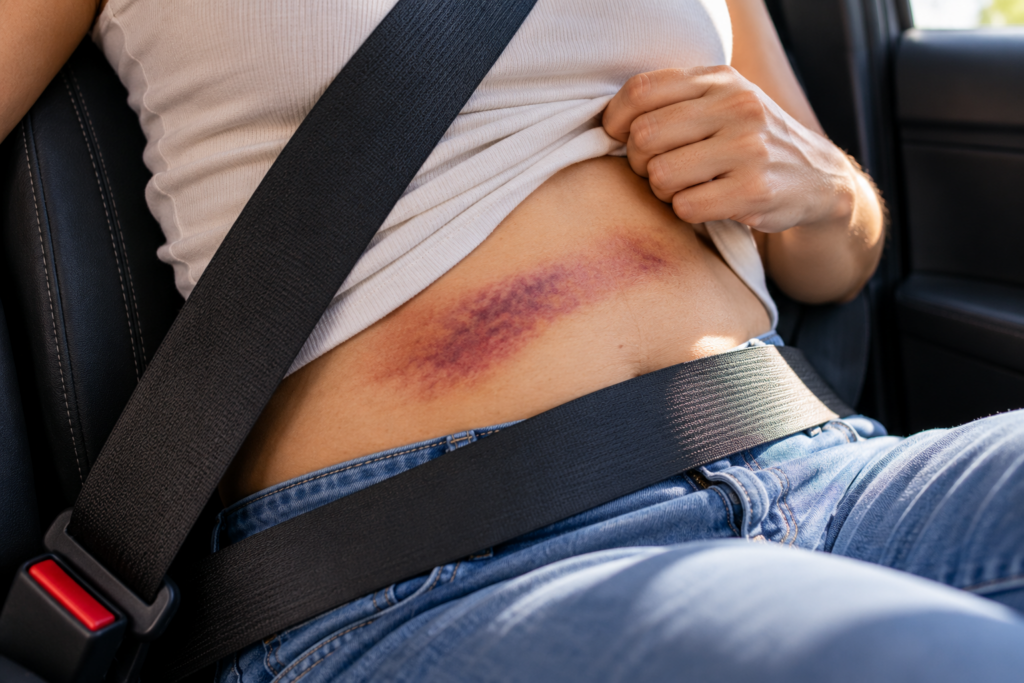
The Seat Belt Sign: What a Bruise Can Reveal About Abdominal Injury After a Boston Car Accident

The medical literature recognizes restraint-related injuries to the spine and abdominal structures. Rutherford documented the increase in neck sprains and sternum fractures following compulsory seat-belt use and separately identified an apparent, unexpected increase in abdominal-organ injuries. Later medical literature continued to emphasize the significance of the seat-belt sign and its association with internal injury.

Read More »

The Seat Belt and Cervical Injury: What Boston Personal Injury Attorneys Should Know

When a person is injured in a motor vehicle crash, the physical evidence of what happened can sometimes be found directly on the body. One of the most important examples is the seat belt sign—a visible bruise, abrasion, or patterned injury corresponding to the path of the restraint.

For attorneys handling Boston and Massachusetts motor vehicle injury cases, a documented seat-belt mark can be important evidence because it shows that substantial restraint forces were actually transmitted through the occupant’s body.

Read More »

Still Hurting After Whiplash? Research Says There is a Great Chance Chiropractic Can Help

They evaluated 93 patients with chronic whiplash symptoms and discovered something fascinating. They divided the sample into three groups. The answer depended heavily on what kind of symptoms the patient had.

74% of Chronic Whiplash Patients Improved

The patients received an average of 19.3 treatments over approximately 4.1 months. The treatment consisted of chiropractic spinal manipulation using a high-velocity, low-amplitude thrust directed at specific vertebral segments.

The big result?

69 of the 93 patients improved following chiropractic treatment.

Read More »

Chronic Whiplash After a Boston Car Accident: What Personal Injury Attorneys Should Know About Chiropractic Care

Researchers Woodward, Cook, Gargan, and Bannister evaluated patients suffering from chronic symptoms following whiplash injuries. Their findings deserve attention from attorneys handling car crash cases in Massachusetts. Gargan and Bannister are two of the most published researchers on whiplash injuries. In this group of 28 patients with chronic whiplash symptoms, 26 improved following chiropractic treatment.

Read More »

Whiplash Injury: Why a “Low-Speed” Collision Can Still Produce Significant Injury

One of the best whiplash review articles was published in the British Journal of Bone and Joint Surgery in July of 2009. The review by Bannister, Amirfeyz, Kelley, and Gargan provides several important points for understanding these cases. The article has 100 references. Dr.’s Bannister and Gargan are probably the most published individuals in history on long-term recovery outcomes of whiplash injuries.

Read More »

Neck Disc Herniation Without Surgery? An Exciting Case Study on Cervical Spinal Decompression

By Treatment #5, Her Radicular Symptoms Were Gone

A recently published 2026 case study provides an exciting look at what happened when researchers used cervical non-surgical spinal decompression in a patient with a significant cervical disc herniation. The results included improvements not only in symptoms, but also in neurological examination findings and MRI measurements.

After approximately 2½ weeks and only five treatments, the patient reported that her radicular symptoms had disappeared and she had returned to normal activities of daily living.

She could once again carry grocery bags with both arms without pain.

Read More »

Book Your Appointment!

Get started on your path to optimal health today.