Low back pain has a remarkable ability to interfere with nearly everything.
Putting on socks becomes an Olympic event. Getting out of the car requires a detailed strategy. And dropping something on the floor may lead to an important decision: “Do I really need that pen?”
For people dealing with a herniated disc, degenerative disc disease, sciatica, or chronic low back pain, ordinary activities can become exhausting. Fortunately, research suggests that non-surgical spinal decompression may offer relief for carefully selected patients—and your spinal discs may appreciate the extra space.
A July 2010 study published in BMC Musculoskeletal Disorders examined whether increased lumbar disc height following non-surgical spinal decompression was associated with reduced disc-related low back pain. The results were encouraging, although the researchers emphasized that larger randomized studies are still needed.
What Is Disc Height—and Why Should You Care?
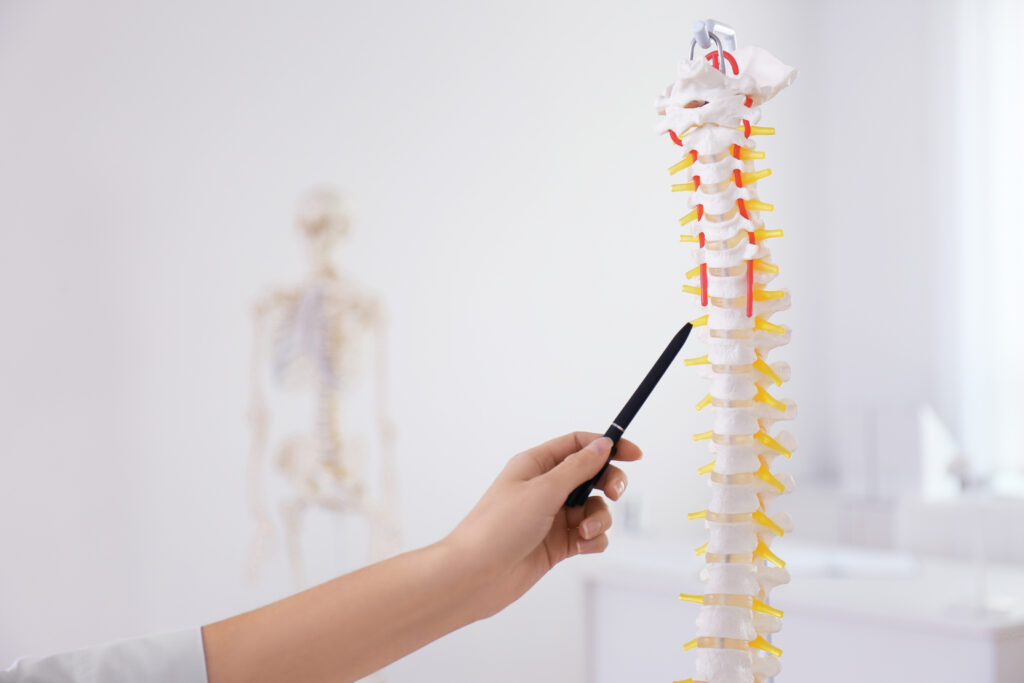
The discs between your spinal bones act like small cushions. They help absorb shock, allow movement, and maintain space around nearby nerves.
When a disc becomes injured, herniated, or worn down, it may lose height. This can increase stress on spinal joints and potentially contribute to irritation of surrounding nerves.
Think of the disc as a jelly doughnut that has spent too much time underneath a stack of encyclopedias. Eventually, it may flatten, complain, and possibly send pain down your leg just to make sure you’re paying attention.
Non-surgical spinal decompression uses controlled, computer-guided traction to gently stretch the spine. The goal is to reduce pressure within affected discs, improve spinal spacing, and create a better mechanical environment for healing.
What Did the Researchers Study?
The researchers reviewed 30 adults with lumbar disc herniation or discogenic low back pain. Their average age was 65, and they had experienced low back pain for an average of approximately 12½ weeks.
Each patient completed a six-week course of motorized non-surgical spinal decompression system. CT scans were taken before and after treatment to measure lumbar disc height, while pain was rated on a scale from zero to ten.
What Happened?
The average reported pain score decreased from 6.2 before treatment to 1.6 afterward.
At the same time, average disc height increased from 7.5 millimeters to 8.8 millimeters.
Even more interesting, the researchers found a statistically significant relationship between increased disc height and reduced pain. In other words, patients whose discs gained more height tended to report greater pain improvement.
That doesn’t mean every unhappy disc can be transformed into a brand-new cushion. The study was retrospective, included only 30 patients, and did not have a placebo or comparison group. It also did not establish whether the improvements lasted for years.
Still, the combination of reduced pain and measurable imaging changes makes the findings noteworthy.
Who Might Benefit From Spinal Decompression?
Non-surgical spinal decompression may be considered for selected patients experiencing:
· Herniated or bulging lumbar discs
· Discogenic low back pain
· Degenerative disc disease
· Sciatica
· Certain forms of nerve compression
· Persistent low back pain that has not responded adequately to other conservative care
Spinal decompression is not appropriate for everyone. Patients with certain fractures, severe osteoporosis, spinal instability, tumors, infections, or other medical conditions may require a different approach.
That is why a proper examination and review of available imaging are essential before starting treatment.
Boston Back Pain Doesn’t Take the T
Anyone who lives or works in Boston knows that the city is not especially gentle on sore backs.
There are brick sidewalks, steep Beacon Hill streets, long commutes, questionable office chairs, and the occasional winter snowbank that appears to require heavy machinery—but somehow gets assigned to you and a shovel.
At Charles Street Family Chiropractic, Dr. Chris Quigley evaluates patients from Boston, Beacon Hill, Back Bay, Cambridge, Brookline, Somerville, Newton, Quincy, and throughout Greater Boston who are looking for conservative options for low back pain, sciatica, and lumbar disc injuries.
The goal is not to chase symptoms endlessly. It is to identify the likely source of the problem, improve spinal function, and help you return to the activities your back has been rudely interrupting.
The Bottom Line
This study found that six weeks of non-surgical spinal decompression was associated with both increased lumbar disc height and substantially reduced low back pain. The relationship between the two suggests that restoring disc height may be one mechanism through which some patients experience relief. Similar results were found in studies by Schueren in 2025 and Connolly in 2025.
If you’re searching for non-surgical spinal decompression in Boston, herniated disc treatment in Boston, or sciatica relief without surgery, schedule an evaluation with Dr. Chris Quigley at Charles Street Family Chiropractic. Tap here to make an appointment to see if we can help.
Your back may not send a thank-you card. But being able to put on your socks without negotiating with your spine would be a pretty good start.
Reference
Apfel CC, Cakmakkaya OS, Martin W, Richmond C, Macario A, George E, Schaefer M, Pergolizzi JV. Restoration of Disk Height Through Non-Surgical Spinal Decompression Is Associated With Decreased Discogenic Low Back Pain: A Retrospective Cohort Study.BMC Musculoskeletal Disorders. 2010;11:155. doi:10.1186/1471-2474-11-155.
“I was majoring in chemistry at Villanova University when my path turned to chiropractic. I was going on interviews to be a pharmaceutical sales representative, and they always asked me what I wanted to be doing in five years. My answer was always the same: “I want to be helping people, enjoying my work, while making a difference.”
The medical literature recognizes restraint-related injuries to the spine and abdominal structures. Rutherford documented the increase in neck sprains and sternum fractures following compulsory seat-belt use and separately identified an apparent, unexpected increase in abdominal-organ injuries. Later medical literature continued to emphasize the significance of the seat-belt sign and its association with internal injury.
When a person is injured in a motor vehicle crash, the physical evidence of what happened can sometimes be found directly on the body. One of the most important examples is the seat belt sign—a visible bruise, abrasion, or patterned injury corresponding to the path of the restraint.
For attorneys handling Boston and Massachusetts motor vehicle injury cases, a documented seat-belt mark can be important evidence because it shows that substantial restraint forces were actually transmitted through the occupant’s body.
Charles Street Family Chiropractic | Boston, Massachusetts When most people hear the word laser, they picture something from Star Wars, a grocery-store scanner, or perhaps
CSFC provides quality care by trained and qualified professionals. Not only have they been of great help with the pains and pangs but they also brought to my attention various other areas where I need help but I wasn't aware. Excellent experience!!
I’ve been visiting Dr.Chris and his staff for a couple years now. All the staff is very welcoming and more than accommodating. I love being part of the family and would never think about going somewhere else.
I came into Charles Street Family Chiropractic thirteen months ago barely able to walk, sleep and stand up straight. The adjustments and treatments I received have changed all of that! Dr’s Chris, Kelly and Nick are excellent and the support team with Mary and Lizbeth is wonderful too. If I could give ten stars for the service I received here, I would .
I've been going to Charles Street Family Chiropractic for a few months now and I can truly say it has improved my quality of life!
I came in suffering with weekly migraines, Neck stiffness/pain and Tension all over my back. Now I wake up feeling lighter and my migraines have tremendously improved.
So happy I found this practice! Dr. Makela, Dr. Quigley, Dr. Chawla and Newest addition to the Team Dr. Nick are amazing.
I highly trust and recommend Charles Street Family Chiropractic to my family + friends. I have been a patient since 2023. The team here has genuinely helped me heal severe spine pain & return to a better pain-free quality of life with my spine.
The entire team here at Charles Street Family Chiropractic is knowledgeable, reliable, patient, trustworthy, helpful & friendly every visit I’ve had since 2023!
The office has truly provided relief to my spinal / neck injury + pain I was suffering from before I started my care plan with the team here leading me to a now pain-free life the vast majority of days
Dr. Chris & Dr. Kelly in addition to the entire helpful care team assisted me to identify injuries causing my severe back & neck pain plus limiting my mobility which all started after I had been involved in a car crash in 2023.
Carefully looking at my imaging Dr. Chris & the team recommended a range of non-invasive treatments including physical therapy exercises in combination with chiropractic adjustments. The team also incorporated Spinal Decompression sessions & laser therapy atop other helpful non-invasive relief-providing treatments that aided my body to heal & strengthen to where I was before my injury.
Thankful this practice exists to help me & other patients reduce pain levels and return to life pain free again with non-invasive options!
Parts of my life I have been able to return to with significantly lower to zero pain levels & improved mobility than when I first started treatment for my injury include everyday things such as being a Dad to help care for my partner and our toddler + dog at home, work as a private chef / ride share driver, play tennis, go for runs, hike & walk my dog all thanks to the care at Charles Street Family Chiropractic!
Extremely welcoming and accommodating to all ages and comfort levels. They handled my family with great care and never forget a detail. Incredible experience and freed my of back pain I have had for years. I can pick up my children first thing in the morning
I had a great experience with Dr. Kelly. The examination was very thorough, and she took the time to explain everything clearly and comprehensively. She was professional, knowledgeable, friendly, and made the whole visit feel very comfortable.
The Office Integrators were also very nice, helpful, and easygoing, which made the overall experience even better. The whole office has a welcoming and relaxed atmosphere, and I really appreciated the care and attention throughout my visit.
I've been going to Dr.Quigley, at Charles street, family, Chiropractic, for 34 years, under doctor quigley's care i am 70, but my body like it's 40. To all the years there were times where I could hardly straighten out my lower back.And with a few adjustments , I walked out of their feeling like brand new. No one has to walk around with back pain or neck pain etc. That is not quality of life, I highly recommend Chiropractic treatment.
I came to CSFC with neck, shoulder & arm pain due from working on my computer at home. Within time, I improved my range of motions in my neck and no longer struggle for a good night's rest. Something I have not been able to do in weeks. Goal: Continue services to greater improve the alignment of my spine as a preventive care along with other wonderful benefits. Check them out!
Great team, and I would highly recommend.
Thanks Dr. Chris & Dr. Kelly
Wonderful experience nice place all employees are friendly and Doctor Christopher is amazing and very knowledgeable about all of the issues that I have he is very experienced and explains everything to me is a great resource and he has a wonderful team all of them are the best I has been only in three sessions and I can feel the difference on my back pain I feel amazing this is a place that I sure would recommend it to anyone who is interested and looking for a Chriropractic specialist in Boston with the best team.
Thorough assessment and exams! Postural, weight bearing, trays, ROM readings. And crash experts. I came here post car accident, and Dr Chris and Dr Kelly have helped some of my chronic issues!. Have recommended to family. Great, friendly practice, that develops a program with tools and techniques to work with you.
I am a huge fan of this chiro office and everyone that works here! I started going to CSFC back in November after getting a free posture assessment at an event. I had been trying to fix my bad posture for a while and starting seeing (and feeling!) results shortly after beginning my treatment plan. We're far into the treatment plan now and I intend on coming back regularly even after I finish. I noticed I can walk longer, work with less pain, and sleep better due to my adjustments and exercises. I have had a history of injuries and they are very accommodating and meet you where you are on your health journey. The office is super flexible and caring. I cannot recommend them enough!
I've had an excellent experience with this chiropractor. From my first appointment, they took the time to listen to my concerns, thoroughly explain my treatment plan, and make sure I felt comfortable throughout the process.<br><br>What stands out most is the genuine care and attention I receive at every visit. I never feel rushed, and I always leave feeling better than when I arrived. I highly recommend this practice to anyone looking for knowledgeable, compassionate, and effective chiropractic care.
I’m still a new patient, but I’ve been really impressed with my experience so far. I first heard about Charles Street through my gym, F45, when they came in to do free posture checks, and I’m so glad I decided to follow through and make an appointment.<br><br>I’ve been to chiropractors in the past, and my first visit there compared to my first visit here is night and day. They took X-rays, spent a lot of time talking with me, and Rosa and Dr. Kelly explained everything thoroughly and clearly.<br><br>I know I still have some work to do before I start seeing major improvements, but after just my first three appointments, I already feel confident that I’m in the right place to get the results I’m looking for. I would absolutely recommend them to anyone looking for chiropractic care, whether it’s for post-injury recovery or simply improving overall quality of life.
Super friendly, professional, and passionate team. Just met them for a complimentary screening at Healthworks and they were so helpful. See you soon!!!
Charles Street Chiropractic is a necessary part of keeping up your health particularly regarding your spine and nervous system.<br>Highly recommend Dr Chris and his team!
Came here for my first ever Chiropractor visit and I refuse to go anywhere else! This is a talented, professional, and kind team. Whether its your first time or your a frequent flyer, the whole team makes the experience comfortable and educational. Whenever I have concerns or questions, they address them right away with no hesitations. My migraines have improved and so has the rest of my alignment and aches and pains. Highly recommend!
Love this place! It feels like a family every time you come in. I was so skeptical of going to a chiropractor but they have helped me get rid of some of my neck pain and I have such a better range of emotion. The staff are incredible and so nice. It’s one of my favorite parts of my week! Highly recommend.
Can't say enough good things about this clinic! I have recurring back pain from sports, and I thought it was just normal but Dr. Quigley is so thorough and patient! If you're hesitant, definitely give them a try first.
Had a great experience at Charles Street Family Chiropractic! Dr. Chris and the team are welcoming, professional, and really take the time to listen. I always leave feeling better and well taken care of. Highly recommend!
Ever since i started coming to Charles Street Family Chiropractic, I’ve had significant relief in my neck and back pain. I have so much more movement in my neck and can finally sleep comfortably through the night. The staff is incredible and I always enjoy my visits!
everybody are very professional but at the same time very nice and kind treating people who suffer physically , including myself, very nicely and in a relaxing way. i would recommend big time to everyone. special note for Dr Kelly , super professional !
Wonderful staff helping so many people. My pain has diminished since I first started after a car accident. I have better mobility, range of motion and posture post accident damage. They are very accommodating no matter whether you are running late, need help moving positions, need a different treatment, whatever. I highly recommend cold laser for pain & inflammation reduction (my favorite treatment). Drs. Chris & Kelly are terrific, as are the front office staff!
Love coming here - it is like a second family! Everyone is so kind, and they really explain your case to you, educate you on how a healthy spine looks like, and then build a solid plan to get you there. This is my weekly routine, coming here, feeling better, feeling happy. Join us!
Dr. Kelly and the team are thorough and supportive throughout the whole process. I am grateful for their attentiveness and willingness to help with a comprehensive assessment and evaluation.
I’ve been a patient here for several years and have always had a great experience. Dr. Chris and Dr. Kelly are amazing! The chiropractors are knowledgeable, caring, and really take the time to listen. I consistently get relief from the pain in my neck and shoulders after my visits. The staff is consistently friendly and welcoming, which makes every visit comfortable. They make you feel like family. I highly recommend this office to anyone looking for a chiropractor who genuinely cares about their patients.
Great service and location. The team is really efficient and focused on treatment and education. As a part of the service you get some take home tools to aid with stretching and other exercises that have been helpful. I've been going for a number of months and highly recommend.
I had extreme pain in my neck & shoulders. After seeing Dr. Chris 4 times my pain had gone away and I was able to work pain free. Dr. Chris provided me a variety of at home exercises to free up my discs in my back that had been locked up. I have been pain free for the last 6 or 9 months and was able to continue working my job with Boston Duck Tours.
I can’t say enough great things about Charles Street Family Chiropractor. When I first came in, I was in serious pain and was being told that surgery might be my only option. Walking was difficult, and my quality of life had taken a huge hit.<br>Thanks to their care, professionalism, and personalized treatment plan, I was able to avoid surgery completely. Not only am I pain-free, but I’m also walking normally again and feeling better than I have in a long time. The staff truly listens, explains everything clearly, and genuinely cares about your recovery, not just quick fixes.<br>If you’re dealing with pain and feel like you’re running out of options, I highly recommend Charles Street Family Chiropractor. They gave me my mobility and confidence back, and I’m incredibly grateful for the results.
I came to CSFC with neck, shoulder & arm pain due from working on my computer at home. Within time, I improved my range of motions in my neck and no longer struggle for a good night's rest. Something I have not been able to do in weeks. Goal: Continue services to greater improve the alignment of my spine as a preventive care along with other wonderful benefits. Check them out!<br><br>Great team, and I would highly recommend.<br><br>Thanks Dr. Chris & Dr. Kelly
I have been coming to Charles Street Family Chiropractic for about eight months and cannot say enough good things about them. I own a home in the North End and had a bit of prior experience with other local chiropractors that I was not happy with so I didn’t know what to expect coming into this office. Needless to say, they set the standard HIGH. At my first appointment, they did x-rays along with a multitude of other range of motion tests, etc. to get a base level of where I was at. They also had me fill out a lot of paperwork and then we went over everything in my paperwork. They are extremely thorough! At the second appointment, we went over what my X-rays showed, where my bones should be (optimally), my plan of action and what I would need to do to achieve my goals (which includes simple at home exercises).<br><br>They explain everything in layman’s terms. They are easy to work with and very understanding. They are super flexible with appointments, which is so appreciated given how hectic life can be sometimes. They also do periodic progress exams, which include X-rays and some additional paperwork to see how you are doing. They actually care to see that you are improving and don’t just want to string you along for more appointments than necessary just to make more money. They have a super easy check-in process every time you come for an appointment - you just scan your card and start your warm-up exercises. There’s no sitting around and waiting to get checked in. Once you’re done with your warm-up exercises, you lay on an open table and as soon as a chiropractor is available, they’re able to start your adjustment. You’re in and out of there so much faster than a typical appointment.<br><br>Everyone in the office is so friendly, kind, and compassionate. Mary, Elizabeth, Erin, and Paris at the front desk are always smiling and happy to chat. Dr. Kelly and Dr. Chris are the absolute best!! They can tell just by feel what spots are bothering me before I even tell them. I love coming in to get adjusted because I know I’m always going to leave feeling better than when I came in. Also, I highly suggest looking into the pressure wave - Elizabeth does such a great job with it!<br><br>For as long as I’m living in Boston, I will always come to Charles Street Family Chiropractic - they are worth the walk over from the North End! I can promise you, you will not find a better chiropractic office with better doctors and staff! They are truly the best and will help your body feel so much better (and boost your spirits, too)!
I've been coming here a few weeks now, and it's already making a significant difference in my life. The tightness and stiffness in my lower back has lessened and my posture is improved. After the first check-in, the appointments for routine adjustments are short. I never have to wait, so I can get in and out in 20 minutes. All the staff are kind and the office is clean.
Came in with lower back pain and neck pain, after 3 sessions, I am seeing relief with little to no pain. I would recommend this practice to anyone! Staff is kind and professional.
Seeing a chiropractor was the best decision I made for my body. Dr. Kelly and Dr. Quigley are the Best!! The staff is amazing and I can’t recommend them enough.
I've been going here for over a year now. And I feel more energized and more aligned, and the staff and doctors are excellent in communicating and understanding their clients.I recommend this sight to everyone.
Charles Street Family Chiropractic is simply the best spot for you to start feeling better. I was in an accident two months prior to my first visit and was in a lot of pain. Dr. Chris, Dr. Kelly and team do an amazing job of handling your care. They not only treat you, but provide feedback on PT exercises, and give you the knowledge of what happing with your progress. If you are looking for patience, warmth, high quality care, and results then look no further.
They are the best! Dr. Chris and Dr. Kelly are so personable and great. Their treatment plans and exercises have really improved my neck and back pain and overall every day life.
I came to Charles Street Family Chiropractic originally for ongoing shoulder pain and posture issues, but I had no idea how much of the discomfort I was feeling — fatigue, stomach discomfort, even my energy levels — was connected to my nervous system. They didn’t just treat the pain, they educated me in a way no one had before.<br><br>I felt relief immediately, but the real long-term impact came from the at-home exercises and tools they gave me. They don’t just adjust you and send you on your way — they make sure you understand what’s happening in your body and how to take care of yourself in between visits. I literally travel with the chiropractic pillow they recommended! They’ve completely changed the way I support my body day-to-day.<br><br>They’ve become my first stop after a long flight, a workout tweak, or even just when my posture’s gone off from too much laptop time. I can’t recommend them enough if you want care that’s both highly effective and empowering.
Drs Chris and Kelly and the staff, Mary, Elizabeth, and Rosa at Charles Street Family Chiropractic are a wonderful team who have worked to help me heal. I had a terrible fall causing a compression fracture in my lower back. For more than one year, I did not feel better, I could not stand up straight, or walk more than one block. I tried everything including a kyphoplasty, cortisone injections, an ablation, physical therapy, aquatherapy, acupuncture, dry needling, and cupping Nothing worked. Finding Dr. Chris changed my life! The decompression machine coupled with the wobble chair, neck stretches, posture hat and the adjustments have given me hope that I will be able to resume my lifestyle before the fall. Thank you all at Charles Street Family Chiropractic!
Dr. Chris and Dr. Kelly have been an amazing help while I’ve been healing from my car accident! My recovery has been long but with the Charles Street Family Chiropractic team following along with me I have felt supported and well taken care of the whole time! I am so grateful for them!
I really like the clinic and the doctors. From my very first visit, I asked a lot of critical questions, and both doctors were able to respond thoroughly and clearly — which really demonstrated their professionalism. The service has always been warm and welcoming. In just one month, with three visits per week and regular exercises and adjustments, we improved my neck curvature from -10 degrees to 30.5 degrees (with 45 degrees being the ideal). I'm very happy with both the results and the care I received. I highly recommend giving them a try — see how they work and whether it’s the right fit for you! Thank you very much for work that you doing!