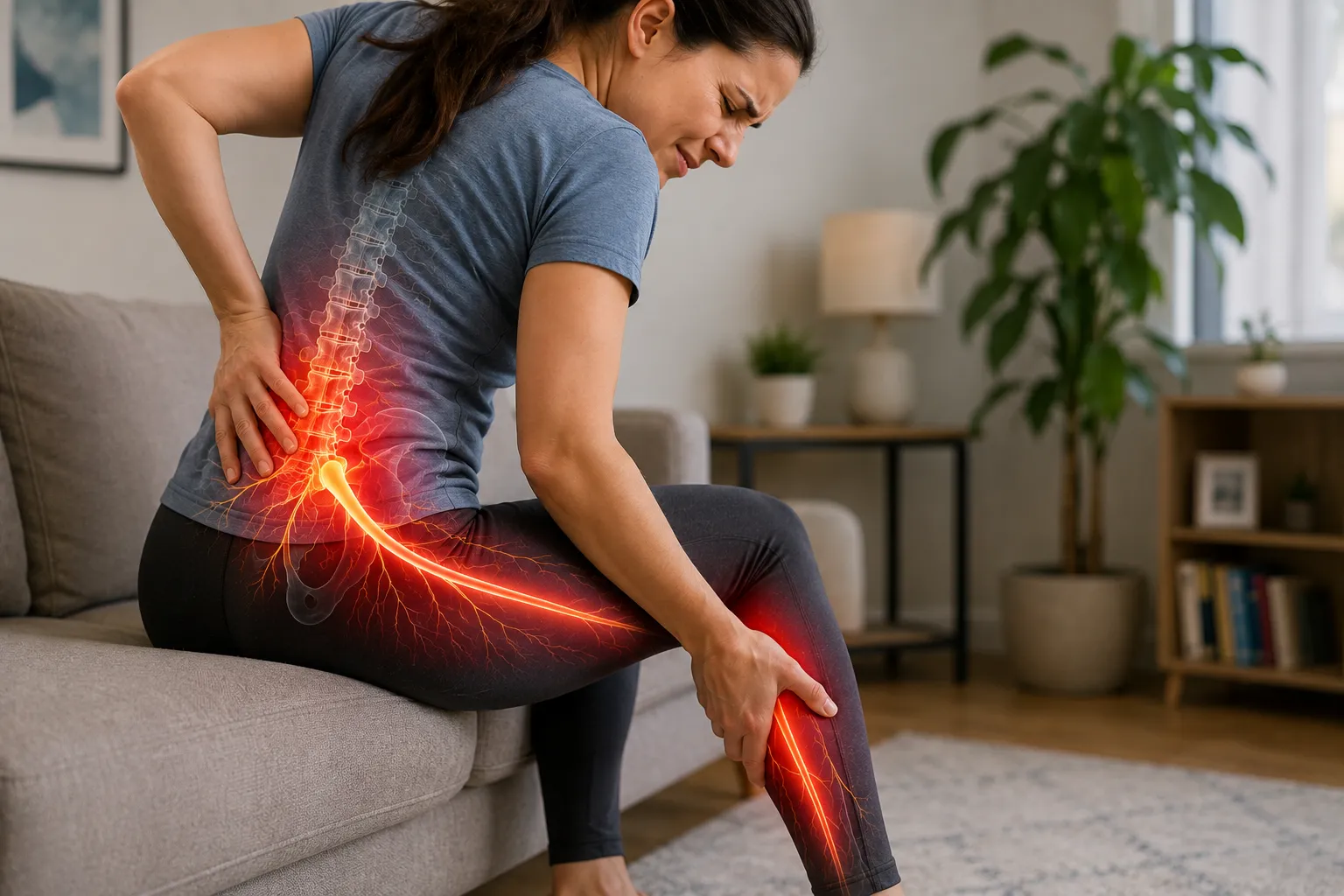
If you’ve ever experienced sciatica, you know it isn’t simply “a sore back.” The burning, shooting, electric pain traveling from your lower back into your buttock or leg can make sitting, sleeping, driving, and even putting on your shoes miserable.
For many patients with radicular low back pain, medications such as gabapentin are prescribed in an attempt to control nerve-related symptoms. But an interesting study published in the July 2023 issue of BMJ Open examined another question: Are patients who receive chiropractic spinal manipulation for newly diagnosed radicular low back pain less likely to receive a gabapentin prescription?
The answer was significant.
Researchers found that patients receiving chiropractic spinal manipulative therapy had 47% lower odds of receiving a gabapentin prescription during the following year compared with similar patients receiving usual medical care.
Radicular low back pain occurs when a spinal nerve becomes irritated or compressed. Patients often describe symptoms extending from the lower back into the buttock, thigh, calf, or foot.
If you’ve ever felt an electrical jolt travel down your leg when you move the wrong way, you already know why patients want relief—and want it quickly.
Chiropractic Care vs. Gabapentin Prescriptions
The 2023 study used a large U.S. healthcare database containing linked medical records, insurance claims, and pharmacy information from more than 122 million patients.
Researchers focused on adults ages 18 to 49 with a new diagnosis of radicular low back pain. They compared patients who received chiropractic spinal manipulative therapy (CSMT) with those receiving usual medical care.
After statistical matching, each group contained 1,635 patients, allowing researchers to compare patients with similar characteristics.
Over the following year, the chiropractic group had significantly lower odds of receiving a gabapentin prescription: odds ratio 0.53, representing about 47% lower odds than the usual-medical-care group.
That’s an intriguing difference.
Why Is Gabapentin Part of the Conversation?
Gabapentin was originally developed for epilepsy and is also FDA-approved for postherpetic neuralgia. However, physicians sometimes prescribe it off-label for radicular low back pain and sciatica.
The authors noted that gabapentin is commonly prescribed for this condition despite guideline recommendations that do not generally support its use for radicular low back pain.
This doesn’t mean patients should stop taking gabapentin or change medications without speaking with their prescribing physician.
It does suggest that patients interested in reducing their reliance on medications may want to discuss conservative treatment options with their healthcare providers.
Why Might Chiropractic Care Help?
Chiropractic spinal manipulation is a hands-on treatment directed toward joints of the spine. The researchers noted that spinal manipulation is supported by systematic reviews and included in clinical practice guidelines for low back pain and radicular low back pain.
At Charles Street Family Chiropractic, treatment isn’t simply about “cracking your back.”
The first priority is determining why you hurt.
Depending upon your examination, diagnosis, and imaging findings, a conservative treatment program may incorporate chiropractic adjustments, non surgical spinal decompression, therapeutic exercise, rehabilitation, soft-tissue treatment, or other appropriate therapies.
An Important Limitation
Here’s where good science matters.
This study found an association—it did not prove that chiropractic manipulation directly caused the reduction in gabapentin prescriptions.
Because this was a retrospective observational study rather than a randomized clinical trial, there may have been differences between the groups that researchers couldn’t completely account for. The authors specifically recommended prospective research to confirm the findings.
The more accurate—and still impressive—message is that patients who began chiropractic spinal manipulation for newly diagnosed radicular low back pain were substantially less likely to receive gabapentin over the following year.
However, similar association has been found in many other studies, most recently by the same author, Trager in the January 2025 article which found a 32% reduction in opioid usage in the chiropractic group.2
Looking for Sciatica Treatment in Boston?
If you’re suffering from sciatica, a herniated disc, leg pain, or radicular low back pain in Boston, conservative treatment may be worth considering before assuming medication, injections, or surgery are your only choices.
At Charles Street Family Chiropractic, Dr. Chris Quigley evaluates patients from Beacon Hill, Back Bay, Cambridge, Brookline, Somerville, Newton, Quincy, and throughout Greater Boston who are looking for evidence-based, conservative approaches to low back and sciatic nerve pain. Our use of spinal decompression reduces the need for medications further.
If you’re searching for a Boston chiropractor for sciatica, chiropractic treatment for a herniated disc, or non-surgical treatment for radiating leg pain, call us today at 617-720-1992 to schedule an evaluation to determine which treatment options may be appropriate for you.
The goal isn’t simply to quiet the pain.
It’s to determine what’s causing it—and help you get moving again.
References
Trager RJ, Cupler ZA, Srinivasan R, et al. Association Between Chiropractic Spinal Manipulation and Gabapentin Prescription in Adults With Radicular Low Back Pain: Retrospective Cohort Study Using US Data.BMJ Open. 2023;13(7). doi:10.1136/bmjopen-2023-073258.
Trager RJ, Cupler ZA, Srinivasan R, Harper EG, Perez JA. “Association between chiropractic spinal manipulation for sciatica and opioid-related adverse events: A retrospective cohort study.” PLOS ONE. 2025;20(1):e0317663. doi:10.1371/journal.pone.0317663
“I was majoring in chemistry at Villanova University when my path turned to chiropractic. I was going on interviews to be a pharmaceutical sales representative, and they always asked me what I wanted to be doing in five years. My answer was always the same: “I want to be helping people, enjoying my work, while making a difference.”
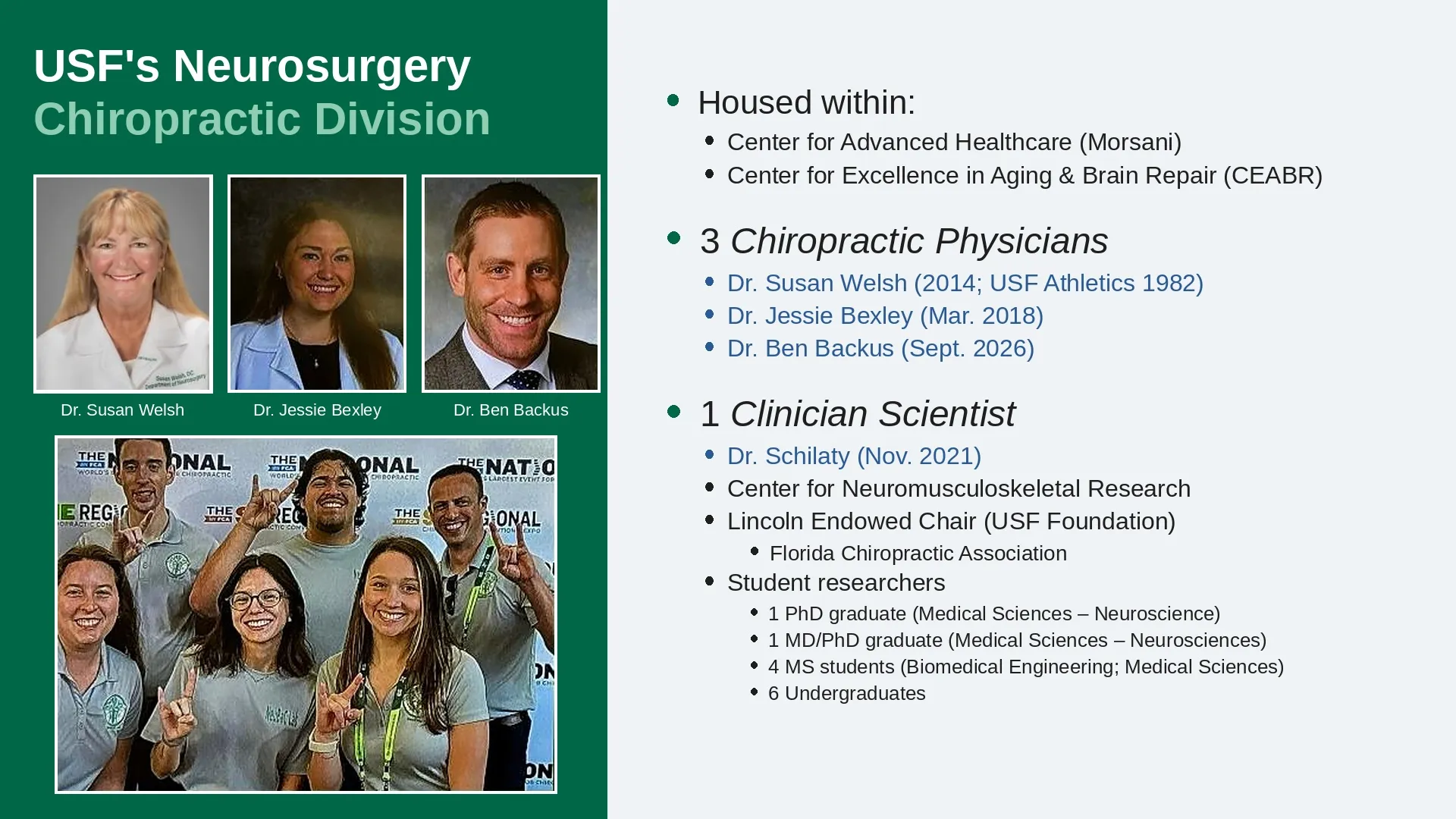
Looking for a Boston chiropractor focused on conservative, drug-free spine care? At Charles Street Family Chiropractic in Beacon Hill, Dr. Chris Quigley helps patients with back pain, neck pain, sciatica, disc problems, and recurring spinal conditions. Chiropractic care can support mobility, function, and active living while reducing reliance on medications and invasive procedures. Even major medical centers, including the University of South Florida Neurosurgery program, are integrating chiropractic care into collaborative spine treatment and research.
A 2015 MRI study found signs of alar ligament injury in 55% of older patients whose chronic neck pain had no other identifiable cause. For Boston and Massachusetts personal injury attorneys, that finding speaks to a familiar problem: the client who still hurts months after a car crash, but whose standard imaging reads as “normal” or “age-related degeneration.”
The number that should stop every elective-surgery patient in their tracks is 94%. In a large 2017 Journal of Pain Research study of 1,842 people who had undergone lumbar spine surgery, 94% reported some degree of residual low-back pain. That does not mean 94% had severe pain, nor does it mean 94% of the operations were surgical failures. But for an invasive procedure that many patients understandably hope will eliminate their back pain, the persistence of any low-back pain in such a large proportion of respondents is difficult to dismiss. The same study found that 20.6% met the researchers’ criteria for failed back surgery syndrome —roughly one out of every five patients. Residual numbness was reported by 69.8%, cold sensations by 43.3%, and paresthesia such as tingling or abnormal sensations by 35.3%.