
102 Charles St

Boston, MA 02114

Phone Number

(617) 720-1992

Follow Us:

Is Sugar Toxic? You Bet it Is!

Tonight was a groundbreaking event in the health of America.  60 Minutes broadcast a segment titled “Is Sugar Toxic” Those of us in the know about nutrition has been talking about this for years. The screw up in classical nutrition happened all the way back in the ’40s.  Dr. Ansel Keys came out with the flawed research project called the “Seven Countries Study”.

In the study, Dr. Keys came up with the idea that fat begat fat.  This was wrong.  Fat doesn’t beget fat, sugar begets fat.  The American public has been paying the price for over 60 years.  We have paid with our lives being much shorter and skyrocketing rates of cancer and heart disease.  We are one of the sickest countries of all industrialized countries on the planet.  Healthcare costs threaten to bankrupt our country. In the report Dr. Robert Lustig states” — we need a balanced diet — but his idea of balance is a drastic reduction in sugar consumption.

To that end, he co-authored an American Heart Association report recommending men should consume no more than 150 calories of added sugars a day. And women, just 100 calories. That’s less than the amount in just one can of soda.”

In our office, we hold a workshop titled “How to Make Your Body a Fat-Burning Machine” where we detail the toxic effects of sugar.  It is held every other Monday at our office at 102 Charles Street, Boston.  Come on by, you will be glad you learned how to eat for long and healthy life.
Picture of Dr. Christopher Quigley

Dr. Christopher Quigley

“I was majoring in chemistry at Villanova University when my path turned to chiropractic. I was going on interviews to be a pharmaceutical sales representative, and they always asked me what I wanted to be doing in five years. My answer was always the same: “I want to be helping people, enjoying my work, while making a difference.”

Book Your Appointment

Get started on your path to optimal health today!

More Valuable Reading

Before Back Surgery: What Three Important Studies Say About Nonsurgical Spinal Decompression

The number that should stop every elective-surgery patient in their tracks is 94%.

In a large 2017 Journal of Pain Research study of 1,842 people who had undergone lumbar spine surgery, 94% reported some degree of residual low-back pain. That does not mean 94% had severe pain, nor does it mean 94% of the operations were surgical failures. But for an invasive procedure that many patients understandably hope will eliminate their back pain, the persistence of any low-back pain in such a large proportion of respondents is difficult to dismiss.

The same study found that 20.6% met the researchers’ criteria for failed back surgery syndrome —roughly one out of every five patients. Residual numbness was reported by 69.8%, cold sensations by 43.3%, and paresthesia such as tingling or abnormal sensations by 35.3%.

Read More »

The Seat Belt Sign: What a Bruise Can Reveal About Abdominal Injury After a Boston Car Accident

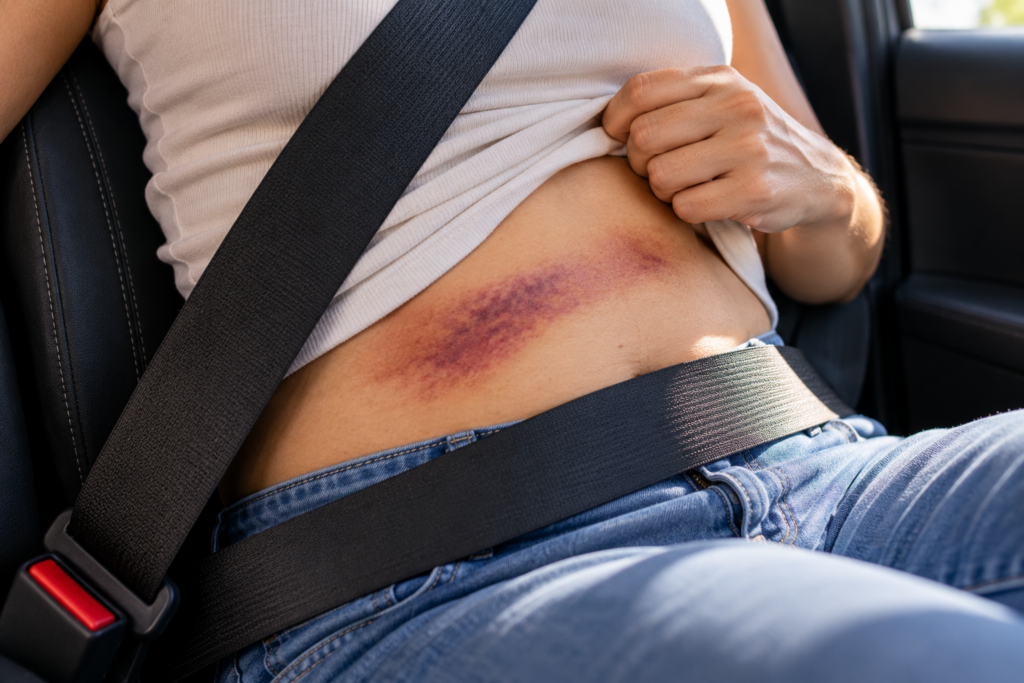
The medical literature recognizes restraint-related injuries to the spine and abdominal structures. Rutherford documented the increase in neck sprains and sternum fractures following compulsory seat-belt use and separately identified an apparent, unexpected increase in abdominal-organ injuries. Later medical literature continued to emphasize the significance of the seat-belt sign and its association with internal injury.

Read More »