

If you work at a desk, scroll through your phone, or spend hours on video calls, you’ve probably felt it—that nagging ache in your neck, the tightness between your shoulder blades, or the dull headache that just won’t quit. You’re not alone. Here in Boston at Charles Street Family Chiropractic, we’re seeing more patients than ever before struggling with posture-related pain, and it’s affecting people of all ages. From college students hunched over laptops in coffee shops to professionals working from kitchen tables, our modern technology habits are creating what many healthcare providers now consider a genuine health crisis. The good news? Understanding how your posture affects your body is the first step toward feeling better, and small changes can make a significant difference in how you feel every single day.
What is Tech Neck, Desk Slouch, and Poor Phone Posture? These terms describe postural strain patterns caused by prolonged forward head position, rounded shoulders, and spinal misalignment from extended technology use. Tech neck specifically refers to neck pain and structural changes from looking down at devices. Desk slouch describes the collapsed, forward-leaning posture common during computer work. Together, these habits create muscular imbalances, spinal stress, and chronic discomfort that can significantly impact your quality of life.
Table of Contents
- Understanding the Modern Posture Problem
- The Biomechanics Breakdown: What Happens to Your Body
- Common Causes and Contributing Factors
- Signs and Symptoms You Shouldn’t Ignore
- How Chiropractic Care Addresses Postural Dysfunction
- Practical Strategies for Better Posture Throughout Your Day
- When to See a Chiropractor for Postural Pain
- Posture Problems Comparison
- Myths vs. Facts About Posture and Technology
- Final Thoughts
- Frequently Asked Questions
- TL;DR – Quick Takeaways
Understanding the Modern Posture Problem
The way we interact with technology has fundamentally changed how we hold our bodies throughout the day. Just twenty years ago, most people didn’t carry a computer in their pocket or spend eight consecutive hours staring at a screen. Today, the average American spends over seven hours daily on digital devices, and that number continues to climb.
What makes this particularly concerning is that our bodies weren’t designed for this type of sustained positioning. The human spine evolved to support an upright posture with gentle natural curves that distribute weight efficiently. When we consistently hold our heads forward and shoulders rounded, we’re working against these natural curves, creating stress patterns that accumulate over time.
Here in Boston, where we have a high concentration of tech workers, healthcare professionals, and students, we’re witnessing this shift firsthand at Charles Street Family Chiropractic. Patients who previously would have sought care for sports injuries or aging-related concerns are now coming in their twenties and thirties with significant postural dysfunction. The pattern is clear: our technology habits are creating structural problems that manifest as real, measurable pain and disability.
Research published in journals like Surgical Technology International indicates that for every inch your head moves forward from its neutral position, the effective weight on your cervical spine increases significantly. A head that normally weighs 10-12 pounds can create 40-60 pounds of force on the neck structures when held in a forward position. This mechanical stress doesn’t just cause temporary discomfort—it can lead to degenerative changes, disc problems, and chronic pain conditions. Reference?
The Biomechanics Breakdown: What Happens to Your Body
Understanding what actually happens inside your body when you slouch or crane your neck forward helps explain why these postural habits cause such significant problems. Let’s break down the biomechanics in simple terms.
Your spine has three natural curves: a gentle forward curve in your neck (cervical lordosis), a backward curve in your mid-back (thoracic kyphosis), and another forward curve in your lower back (lumbar lordosis). These curves work together like springs to absorb shock and distribute the weight of your head and upper body efficiently. When you maintain good posture, your muscles don’t have to work excessively hard to keep you upright.
When you look down at your phone or lean forward at your desk, several things happen simultaneously. Your head moves forward, increasing the load on your neck muscles and cervical spine. Your shoulders roll forward and inward, stretching the muscles between your shoulder blades while tightening your chest muscles. Your mid-back often rounds excessively, reversing the normal thoracic curve. Your lower back may flatten or excessively arch to compensate.
These positional changes create predictable muscular imbalances. The muscles at the back of your neck and upper shoulders become overworked and tight, trying to hold your head up against gravity. The deep neck flexors—muscles that should stabilize your cervical spine—become weak and inhibited. Your chest muscles tighten, your upper back muscles stretch and weaken, and your core stabilizers lose their effectiveness.
Over weeks, months, and years, these patterns can become your new normal. Your nervous system adapts to the altered position, and what once felt awkward becomes your default posture. The soft tissues change length, joints lose mobility in some directions while becoming hypermobile in others, and structural changes can begin to occur in the spinal segments themselves.
Common Causes and Contributing Factors
While smartphones and computers are the most obvious culprits, the postural crisis we’re seeing has multiple contributing factors. Understanding these helps you identify which habits might be affecting you most significantly.
Smartphone use tops the list. The typical smartphone position—held below eye level with your head tilted down—creates immediate forward head posture. People check their phones an average of 96 times per day, and each glance down reinforces the problematic pattern. Even brief periods add up to hours of accumulated stress on your neck and upper back.
Desktop and laptop computer work creates its own challenges. Many workstations aren’t ergonomically optimized. Monitors positioned too low, keyboards too far forward, and chairs without proper support all contribute to sustained slouching. When you’re focused on work or a deadline, you may hold these poor positions for extended periods without noticing the strain building.
The shift to remote work has intensified these issues. Many people working from home don’t have proper office furniture. Working from couches, beds, or kitchen tables creates even worse postural stress than traditional office environments. Without the structure of an office setting, breaks and movement become less frequent.
Tablet use combines the worst aspects of both phones and computers. Tablets are typically held in the lap or on a table at a low angle, requiring sustained neck flexion. E-readers create similar problems. Reading for pleasure—once associated with relaxed posture in a comfortable chair—now often means hours hunched over a screen.
Driving, especially in city traffic like we experience throughout Boston, adds another layer of postural stress. Leaning forward to see traffic, reaching for the steering wheel, and sitting for extended commutes all contribute to forward head posture and rounded shoulders. This forward posture can cause you to be injured more in a rear-end car crash.
Even exercise habits can contribute. Many people focus on anterior muscles like chest and abs while neglecting the posterior chain. This creates muscular imbalances that pull the body forward even when not using technology. I always work both anterior and posterior muscles in my core exercise routine.
Signs and Symptoms You Shouldn’t Ignore
Recognizing the signs of postural dysfunction early helps you address problems before they become chronic or severe. Some symptoms develop gradually, while others appear suddenly after your body reaches a tipping point.
Neck pain is often the first complaint. You might notice a dull ache at the base of your skull, stiffness when turning your head, or sharp pain with certain movements. The discomfort may be worse at the end of the workday or after extended phone use. Some people wake up with neck pain that wasn’t present when they went to bed, suggesting their posture during the day is creating inflammation that becomes noticeable at rest.
Headaches frequently accompany postural dysfunction. Tension-type headaches starting at the base of the skull and radiating forward are particularly common with forward head posture. These differ from migraines but can be equally debilitating, especially when they occur daily or several times per week.
Upper back and shoulder blade pain presents as tightness, burning, or aching between the shoulder blades. Patients often describe it as a knot that won’t release or a constant awareness of tension in the upper back. This occurs because the muscles in this area are overstretched and working overtime to counteract forward shoulder position.
Shoulder discomfort may include reduced range of motion, clicking or popping sounds, or pain when reaching overhead. Forward shoulder position changes the mechanics of the shoulder joint itself, potentially contributing to impingement issues and rotator cuff problems over time.
Arm and hand symptoms can develop as nerve pathways become compressed or irritated by postural changes. Tingling, numbness, or weakness in the arms or hands may indicate that forward head posture and rounded shoulders are affecting the nerves that travel from your neck through your shoulder region to your upper extremities.
Fatigue is a commonly overlooked symptom. When your body works harder to maintain an inefficient posture, you use more energy throughout the day. Many patients report feeling exhausted despite adequate sleep, not realizing their postural habits are literally draining their energy.
Reduced concentration and productivity often correlate with postural problems. When you’re uncomfortable, your brain dedicates resources to managing that discomfort rather than focusing on your work or activities. Studies have shown that pain and postural stress can measurably reduce cognitive performance.
How Chiropractic Care Addresses Postural Dysfunction
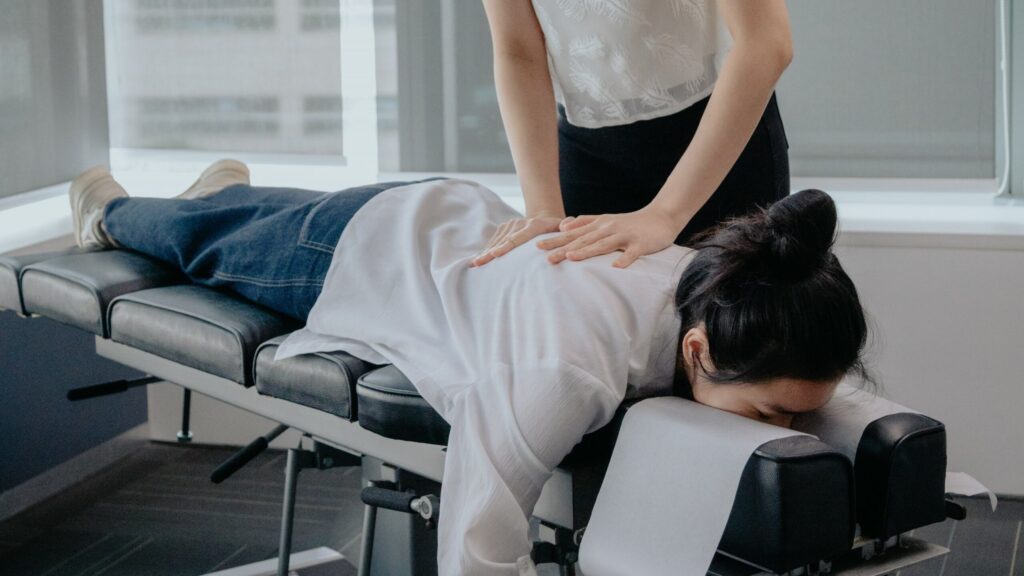
At Charles Street Family Chiropractic, we see postural dysfunction as a structural problem that benefits from a structural solution. Chiropractic care offers a conservative, non-invasive approach that addresses the underlying biomechanical issues rather than simply masking symptoms.
The chiropractic approach begins with a thorough assessment. We evaluate your posture in different positions, assess spinal alignment, check for restrictions in joint movement, and identify muscular imbalances. We also want to understand your daily habits—what your workstation looks like, how you use your devices, and what positions you hold most frequently. This comprehensive picture helps us develop an individualized care plan. X-rays are a vital part of this assessment. Any postural check-up that does not use imaging, is going to miss important details of structural problems.
Chiropractic adjustments address joint dysfunction and spinal misalignments that develop from sustained poor posture. When spinal segments lose proper motion or position, it affects how your nervous system functions and how surrounding muscles perform. Specific adjustments help restore normal joint mechanics, reduce irritation to nerve structures, and support your body’s natural healing processes.
For postural conditions like tech neck and desk slouch, we often focus on the cervical spine, thoracic spine, and shoulder girdle. These areas work as an interconnected system, so addressing restrictions in one area supports improvement throughout the entire upper quarter. The goal isn’t just to feel better temporarily—it’s to help your body return to more efficient, sustainable positioning.
Soft tissue work complements spinal adjustments. Techniques that address muscle tension, trigger points, and fascial restrictions help rebalance the muscular system. When muscles have been working incorrectly for months or years, they need support in releasing excessive tension and regaining proper function.
Rehabilitation exercises are a critical component of care. We teach specific exercises and stretches designed to strengthen weak, inhibited muscles while releasing tight, overactive ones. These exercises might include deep neck flexor strengthening, scapular stabilization work, thoracic extension mobility drills, and postural awareness training. The most effective exercise program is one you’ll actually do, so we focus on simple, practical movements that fit into your daily routine.
Ergonomic guidance helps you modify the environments where you spend the most time. We provide specific recommendations for workstation setup, phone use habits, and positioning strategies that reduce postural stress throughout your day. Small changes in how you position your monitor, hold your phone, or sit in your car can significantly reduce the cumulative stress on your spine.
The timeline for improvement varies based on how long the problem has existed and how severe the dysfunction has become. Some patients notice significant relief within a few visits, while others with long-standing postural changes require more extended care to achieve lasting results. Evidence suggests that combining manual therapy with exercise and ergonomic modification produces better outcomes than any single approach alone.
Practical Strategies for Better Posture Throughout Your Day
Improving your posture doesn’t require perfection or constant vigilance. Small, consistent changes add up to significant improvements in how your body feels and functions. Here are practical strategies you can implement starting today.
Start with your smartphone habits. The single most effective change is bringing your phone to eye level rather than dropping your head to look down at it. Hold your phone higher, even if it feels awkward at first. When texting or scrolling, bend at your elbows rather than your neck. Set reminders to check in with your posture every hour. Consider limiting recreational phone time or breaking it into shorter intervals with breaks.
Optimize your workstation setup properly. The top of your monitor should be at eye level, about an arm’s length away. The top of the screen should align roughly with your eye level when sitting with good posture. Position your keyboard and mouse close enough that you don’t reach forward. Your elbows should rest comfortably at your sides, bent at approximately 90 degrees. Your chair should support your lower back, with your feet flat on the floor or a footrest.
Take movement breaks every thirty minutes. Set a timer if needed. Stand up, walk around, and perform simple movements that counteract your working posture. Shoulder rolls, gentle neck stretches, and standing backward bends all help interrupt sustained postural stress. Even thirty seconds of movement makes a difference when done consistently.
Practice postural awareness exercises. Several times throughout the day, perform a quick posture check. Sit or stand tall, gently draw your shoulder blades back and down, tuck your chin slightly to bring your head back over your shoulders, and engage your core. This shouldn’t feel rigid or forced—think of lengthening your spine rather than forcing it into position.
Strengthen your posterior chain muscles. Simple exercises like rows, face pulls, wall angels, and chin tucks help strengthen the muscles responsible for good posture. Consistency matters more than intensity—five minutes of daily exercise provides more benefit than one longer session weekly.
Modify how you use devices in bed or on the couch. If you read or use devices before sleep, prop yourself up with pillows to support your spine rather than lying flat and holding the device overhead or slouching forward. Consider using a tablet stand or adjustable holder that positions the screen at a better angle. If reading on a device before bed, consider blue blocker glasses to protect your melatonin production, which can be compromised by reading devices before bed. I wear mine religously at night
Practice proper driving posture. Adjust your seat so you’re not reaching for the steering wheel. Your back should contact the seat and the back of your head on the headrest, not just your hips. Adjust your mirrors properly so you don’t twist or lean. On longer drives or flights, take breaks to stand and move.
Create environmental cues that remind you to check your posture. A small sticky note on your monitor, a specific object on your desk, or a phone wallpaper can serve as gentle reminders to assess and adjust your position throughout the day.
When to See a Chiropractor for Postural Pain
Many people wait too long before seeking professional help, hoping their pain will resolve on its own. While minor discomfort from occasional poor posture may indeed improve with rest and self-care, certain situations warrant professional evaluation and treatment.
Seek chiropractic care if your neck or upper back pain persists for more than a week or two despite your efforts to improve your posture and modify your activities. Pain that doesn’t respond to basic home care strategies suggests underlying dysfunction that needs professional attention.
Recurring pain that comes and goes deserves evaluation even if it’s not constant. If you find yourself dealing with the same neck pain or headaches every few weeks, this pattern indicates an underlying problem that hasn’t fully resolved. Addressing the root cause prevents the cycle from continuing.
Pain that interferes with your daily activities, work performance, or sleep quality shouldn’t be ignored. If discomfort limits your ability to work at your computer, turn your head while driving, or sleep comfortably, professional care can help you return to normal function more quickly.
Neurological symptoms require prompt attention. Numbness, tingling, or weakness in your arms or hands could indicate nerve compression or irritation that needs to be evaluated and addressed. While these symptoms often improve with appropriate conservative care, they shouldn’t be dismissed as simply part of poor posture.
Progressive worsening of symptoms suggests the problem isn’t resolving on its own. If your pain is getting worse over time despite your efforts to improve your habits, professional evaluation helps identify what’s driving the progression and develop an effective treatment strategy.
Headaches occurring multiple times per week or interfering with your quality of life may be related to postural dysfunction. Chiropractic care has been shown in research to help with certain types of headaches, particularly those associated with neck dysfunction.
However, certain symptoms require immediate medical attention rather than chiropractic care alone. Severe headache that comes on suddenly, difficulty walking or maintaining balance, loss of bowel or bladder control, or weakness in the legs are red flags that warrant emergency evaluation. Pain accompanied by fever, unexplained weight loss, or a history of cancer also requires medical assessment before pursuing conservative care.
Posture Problems Comparison
| Postural Issue | Primary Location | Common Triggers | Typical Symptoms | Key Prevention Strategy |
|---|---|---|---|---|
| Tech Neck | Cervical spine (neck) | Looking down at phones, tablets, low monitors | Neck pain, headaches, reduced neck mobility | Bring devices to eye level |
| Desk Slouch | Thoracic spine (mid-back) | Poorly set up workstations, prolonged sitting | Upper back pain, shoulder blade tension, fatigue | Optimize workstation ergonomics |
| Forward Shoulder Posture | Shoulder girdle | Computer work, driving, phone use | Shoulder discomfort, chest tightness, arm symptoms | Strengthen posterior shoulder muscles |
| Forward Head Posture | Entire cervical and upper thoracic spine | Combination of screen time and poor ergonomics | Neck pain, headaches, shoulder tension, jaw issues | Postural awareness and movement breaks |
Myths vs. Facts About Posture and Technology
Myth: There’s One “Perfect” Posture You Should Maintain All Day
Fact: No single static posture is healthy when maintained for hours. Your body is designed for movement and position variation. The best posture is your next posture—meaning you should change positions regularly throughout the day. Good ergonomics and postural awareness matter, but so does frequent movement and position changes.
Myth: If You Don’t Have Pain, Your Posture Must Be Fine
Fact: Postural dysfunction can develop gradually without causing pain initially. By the time pain appears, structural changes and muscular imbalances may already be established. Many people have significant forward head posture or rounded shoulders without current symptoms, but these patterns create accumulated stress that often leads to problems later. Prevention through awareness beats waiting for pain to develop.
Myth: Posture Problems Only Affect Older Adults
Fact: We’re seeing significant postural dysfunction in teenagers and young adults who have grown up with smartphones and extensive screen time. Age doesn’t protect you from the effects of sustained poor positioning. In fact, developing poor postural habits early may set the stage for more significant problems as you age. The postural crisis affects all age groups.
Myth: You Just Need to “Sit Up Straight” and Your Problems Will Resolve
Fact: While postural awareness is important, simply trying to force yourself into an upright position doesn’t address underlying muscular imbalances, joint restrictions, or movement dysfunction. Once postural problems develop, they typically require a comprehensive approach including strengthening weak muscles, releasing tight ones, restoring joint mobility, and modifying daily habits. Willpower alone rarely creates lasting change when structural dysfunction exists.
Myth: Expensive Ergonomic Equipment Automatically Fixes Posture Issues
Fact: While proper ergonomic setup is valuable, the equipment itself doesn’t guarantee good posture or pain relief. A fancy chair won’t help if it’s adjusted incorrectly or if you still slouch in it. Movement breaks, postural exercises, and awareness are equally important. The best ergonomic setup is one that’s properly adjusted to your body and used consistently with good habits.
Final Thoughts
The relationship between technology and posture represents one of the most significant health challenges of our modern age, but it’s also one we can address with awareness and action. Here in Boston, at Charles Street Family Chiropractic, we work with patients every day who are discovering that small changes in how they interact with technology can lead to dramatic improvements in how they feel.
Your posture matters—not because you need to maintain some rigid, perfect position, but because how you hold your body throughout the day directly affects your comfort, function, and long-term spinal health. The accumulated stress from hours of looking down at phones, leaning forward at computers, and sitting in poorly designed workspaces creates real structural problems that manifest as real pain and disability.
The encouraging news is that postural dysfunction responds well to conservative, non-invasive care. Chiropractic treatment combined with rehabilitative exercise and ergonomic modifications helps restore proper biomechanics, reduce pain, and support your body’s natural ability to function optimally. You don’t have to accept neck pain, headaches, or upper back tension as an inevitable part of modern life.
Whether you’re just starting to notice occasional discomfort or you’ve been struggling with chronic postural pain for years, professional evaluation and care can make a meaningful difference. The sooner you address these issues, the easier they are to resolve and the less likely they are to lead to more significant problems down the road.
We invite you to visit us at Charles Street Family Chiropractic to learn how we can help you feel better, function better, and develop habits that support your spinal health for years to come. Your body deserves care that addresses the root causes of your discomfort, not just temporary symptom relief.
Frequently Asked Questions
How long does it take to correct years of poor posture?
The timeline varies significantly based on individual factors including how long the postural dysfunction has existed, the severity of structural changes, and consistency with care recommendations. Some patients notice improvement within weeks, while more established patterns may require several months of care combining chiropractic treatment, exercises, and habit modification. Lasting change requires both professional care and daily attention to your postural habits.
Can poor posture from technology use cause permanent damage?
Sustained postural stress can contribute to degenerative changes in spinal structures over time, but the body has remarkable capacity for adaptation and healing when properly supported. Early intervention prevents more significant structural changes from developing. Even when some degenerative changes exist, appropriate care can improve function, reduce pain, and prevent further progression.
Is it better to use a standing desk or sitting desk for posture?
Neither standing nor sitting all day is ideal—the key is variation. Alternating between sitting and standing throughout the day, combined with movement breaks, provides the most benefit. Whether sitting or standing, proper ergonomic setup and postural awareness matter. A poorly adjusted standing desk can create just as many problems as a poorly adjusted sitting workstation.
Do posture corrector devices and braces actually help?
Posture corrector devices may provide temporary awareness reminders but shouldn’t be relied upon as a long-term solution. They don’t address underlying muscle weakness or joint dysfunction, and prolonged use can actually lead to muscle dependency rather than strength. Active exercises that strengthen postural muscles provide more lasting benefits than passive devices.
Can children develop tech neck from tablet and phone use?
Yes, children and adolescents can definitely develop postural dysfunction from device use, and we’re seeing it increasingly in younger age groups. Their spines are still developing, making proper postural habits particularly important. Parents should limit screen time, encourage active play, ensure proper ergonomics when devices are used, and model good postural habits themselves.
Will improving my posture help with my chronic headaches?
Most often YES! Many types of headaches, particularly tension-type headaches and some cervicogenic headaches, have strong connections to postural dysfunction and neck problems. Research indicates that addressing cervical spine dysfunction and forward head posture can significantly reduce headache frequency and intensity for many people. However, headaches have various causes, so a thorough evaluation helps determine whether postural factors are contributing to your specific situation.
TL;DR – Quick Takeaways
- Tech neck, desk slouch, and poor phone posture create measurable structural stress on your spine, with forward head position significantly increasing the load on your neck—potentially creating 40-60 pounds of force on cervical structures.
- Common symptoms include neck pain, headaches, upper back tension, shoulder discomfort, and fatigue, often developing gradually before becoming chronic without intervention.
- Chiropractic care offers conservative, non-invasive treatment addressing joint dysfunction, muscular imbalances, and biomechanical problems at their source rather than just masking symptoms.
- Practical daily strategies—bringing devices to eye level, optimizing workstation ergonomics, taking movement breaks every 30 minutes, and performing simple strengthening exercises—can significantly reduce postural stress.
- Seek professional care if pain persists beyond two weeks, recurs regularly, interferes with daily activities, or includes neurological symptoms like numbness or tingling in the arms or hands.