
102 Charles St

Boston, MA 02114

Phone Number

(617) 720-1992

Follow Us:

My Advice Is Try Cauliflower “Rice”!

I would like to thank the person who first suggested grating fresh cauliflower to make it into a “rice” like consistency. It has become a new favorite and is incredibly versatile. My advice to you is run, not walk to your kitchen now to try it!

I first heard about this a few years ago amongst the Paleo community as a substitute for rice for those wanting to eliminate grains or even just calories in general. Cauliflower “rice” is simple to prepare and can be used both raw and cooked and also stores well in the freezer once cooked. To create the grainy texture you simply grate fresh cauliflower using a hand grater (the larger grate size) or a food processor.

Chiropractic Blog by Charles Street Family Chiropractic, Inc
Making cauliflower rice

At this stage the raw cauliflower can be used in place of couscous or bulgar in cold salads such as a Tabouli Salad. You can also lightly steam it to make it less crunchy. The amount of time will depend on its use and if it will be further cooked or baked in a recipe.

Experiment with cauliflower 'rice'!

Experiment with cauliflower ‘rice’!

To cook it, you can simply steam in a microwave for about 5 minutes for a large head of cauliflower or you can sauté in a small amount of oil or even steam sauté in broth or water for 5-10 minutes to desired tenderness. The cauliflower is very bland at this point but will easily take on any flavor theme desired. Simply add salt and pepper and use as a base for a curry dish or stew or sauté in olive or coconut oil with onions and chopped veggies for a side dish of fried cauliflower rice. Add diced chicken, any ground meat or diced seafood for a compete meal. Experiment with chopped herbs or spices such as turmeric, paprika and cumin. You can use it in place of rice in burritos to curb the overall carbohydrate content. The options are only limited to your imagination.

Stay tuned for more recipe ideas and let us know if you have any ideas to share.


Picture of Dr. Christopher Quigley

Dr. Christopher Quigley

“I was majoring in chemistry at Villanova University when my path turned to chiropractic. I was going on interviews to be a pharmaceutical sales representative, and they always asked me what I wanted to be doing in five years. My answer was always the same: “I want to be helping people, enjoying my work, while making a difference.”

Book Your Appointment

Get started on your path to optimal health today!

More Valuable Reading

Why Chiropractic Care Should Play a Bigger Role in Public Health

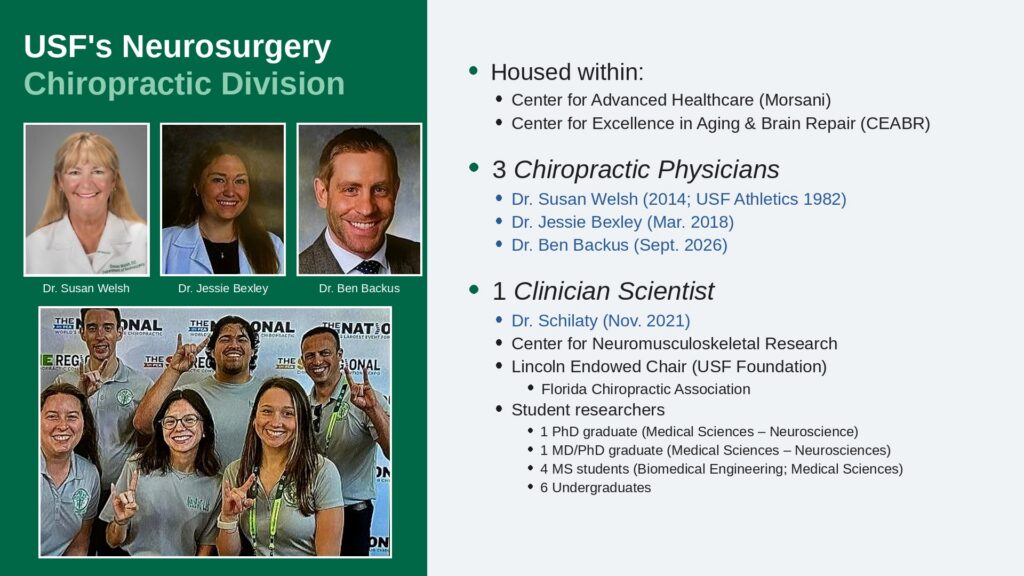
Looking for a Boston chiropractor focused on conservative, drug-free spine care? At Charles Street Family Chiropractic in Beacon Hill, Dr. Chris Quigley helps patients with back pain, neck pain, sciatica, disc problems, and recurring spinal conditions. Chiropractic care can support mobility, function, and active living while reducing reliance on medications and invasive procedures. Even major medical centers, including the University of South Florida Neurosurgery program, are integrating chiropractic care into collaborative spine treatment and research.

Read More »

Before Back Surgery: What Three Important Studies Say About Nonsurgical Spinal Decompression

The number that should stop every elective-surgery patient in their tracks is 94%.

In a large 2017 Journal of Pain Research study of 1,842 people who had undergone lumbar spine surgery, 94% reported some degree of residual low-back pain. That does not mean 94% had severe pain, nor does it mean 94% of the operations were surgical failures. But for an invasive procedure that many patients understandably hope will eliminate their back pain, the persistence of any low-back pain in such a large proportion of respondents is difficult to dismiss.

The same study found that 20.6% met the researchers’ criteria for failed back surgery syndrome —roughly one out of every five patients. Residual numbness was reported by 69.8%, cold sensations by 43.3%, and paresthesia such as tingling or abnormal sensations by 35.3%.

Read More »