If you’ve ever felt like your head was balancing on a wobble board, you may know what upper cervical instability feels like—dizziness, headaches, neck pain, and that unnerving sense that your head just isn’t sitting right. Traditionally, when the ligaments of the upper cervical spine (especially around the atlas [C1] and axis [C2]) become lax, surgery was often seen as the only path toward stability.
But a 2023 case series published in the Journal of Clinical Medicine is challenging that notion—with evidence that carefully restoring the natural cervical lordosis (that graceful forward curve in your neck) can stabilize the upper cervical spine without the knife.1
The Problem: When the Neck Loses Its Curve, the Top Loses Its Anchor
Upper cervical instability (UCI) is often rooted in ligament injury—think whiplash, repetitive micro-trauma, or connective tissue disorders like Ehlers-Danlos. When the stabilizing ligaments loosen, the atlas and axis can shift excessively, stressing neural and vascular structures.
However, the researchers behind this study proposed something revolutionary: maybe instability at the top isn’t just a local problem—it’s part of a global spinal misalignment. When the cervical curve straightens or reverses, the biomechanics of the entire cervical spine change. The upper segments (C0-C2) have to compensate, often moving too much to maintain balance and horizontal gaze. That’s where posture-based correction comes in.
The Study: Non-Surgical, Structural, and Surprisingly Effective
The 2023 Journal of Clinical Medicine study analyzed six adult patients diagnosed with radiographic upper cervical instability who underwent a structural rehabilitation program aimed at improving cervical lordosis and head-posture alignment.
The treatment protocol included:
Mirror-image® exercises to retrain spinal posture
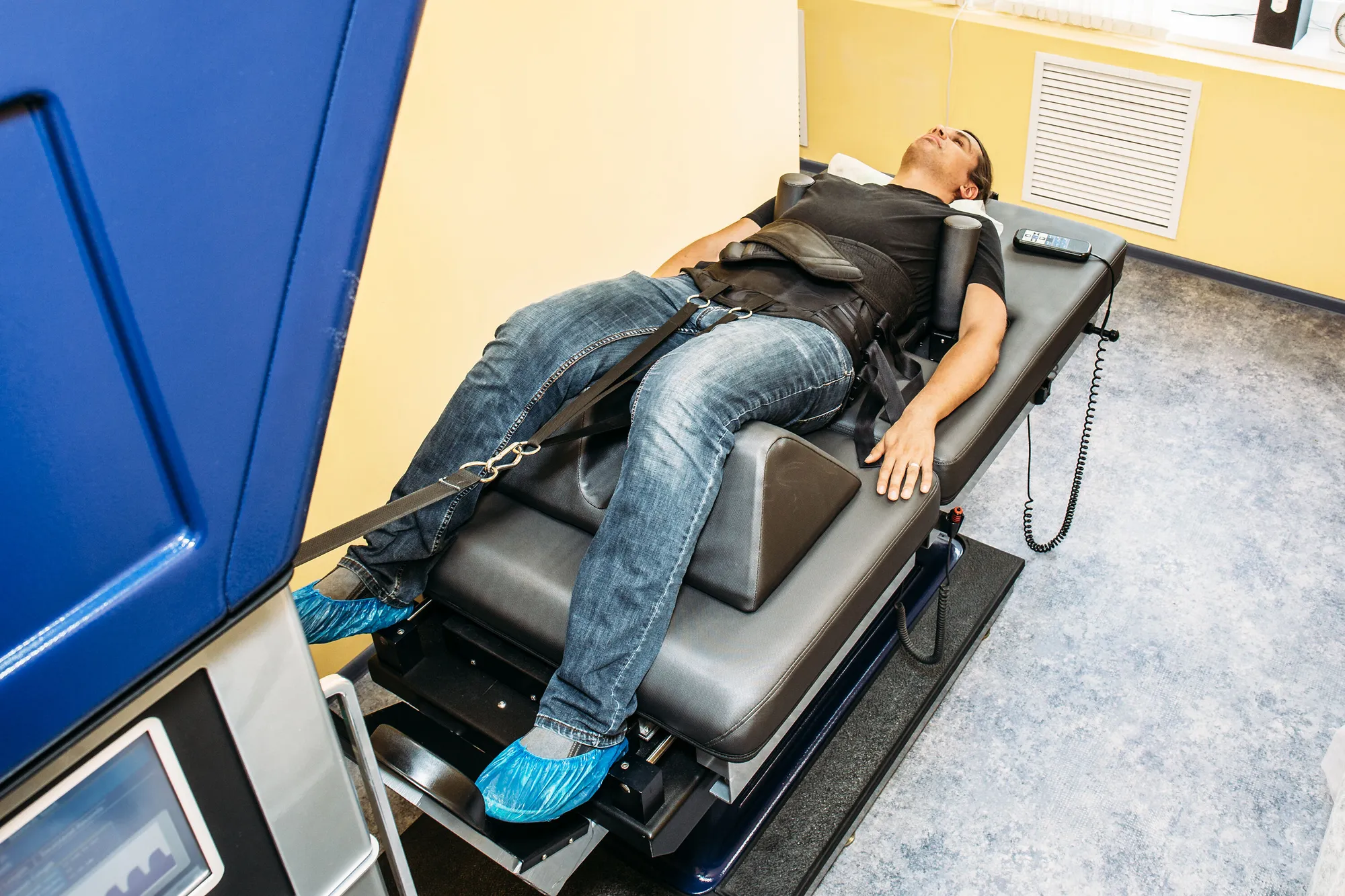
Cervical extension traction to restore curvature
Chiropractic adjustments (targeting subluxated or hypomobile segments)
Home exercises and ergonomic modifications
Patients were re-evaluated with radiographs that measured:
Cervical lordosis angle (C2-C7 Cobb angle)
Atlas plane line
Head translation (forward head posture)
Atlantoaxial alignment (C1-C2 relationship)
After an average of 30-40 sessions, every patient showed increased cervical lordosis, reduced forward head translation, and—most importantly—radiographic reduction in signs of upper cervical instability. Clinically, patients reported decreased neck pain, reduced headaches, better balance, and improved concentration.
The Mechanism: Restore the Curve, Rebalance the Load
Why would improving cervical lordosis stabilize the upper neck? Think of it like realigning the foundation of a house. When the neck loses its curve, gravitational load shifts forward—creating chronic tension on the upper cervical ligaments as they fight to keep the head upright.
Restoring the curve redistributes those forces through the vertebral column, allowing the upper cervical ligaments to heal and re-tension naturally. It’s biomechanical harmony: fix the global structure, and the local problem begins to resolve.
What It Means for Patients (and Practitioners)
This study adds to the growing body of evidence that structural correction—especially when guided by precise imaging and customized rehabilitation—can produce measurable, functional improvements in patients once considered surgical candidates.
It highlights a paradigm shift: rather than immobilizing an unstable joint with fusion, clinicians can sometimes stabilize by restoring motion—the right kind of motion, distributed properly across the curve of the neck.
For patients, it’s a beacon of hope: non-invasive, corrective care that addresses the root cause of instability rather than just the symptoms.
The Takeaway
Upper cervical instability doesn’t have to mean a lifetime of fear or a trip to the operating room. This 2023 case series demonstrates that through posture-based rehabilitation and restoration of cervical lordosis, patients can regain structural integrity, neurological calm, and everyday confidence—naturally.
So, the next time someone tells you your neck pain is “just bad posture,” remember: posture is power. And in the world of spinal stability, sometimes the most advanced treatment is simply putting things back where nature intended.
Call our Boston chiropractic office today at 617-720-1992 to see if we can help.
1. Non-Surgical Management of Upper Cervical Instability via Improved Cervical Lordosis: A Case Series of Adult Patients Journal of Clinical Medicine February 23, 2023; Vol. 12; No. 5; Article 1797
“I was majoring in chemistry at Villanova University when my path turned to chiropractic. I was going on interviews to be a pharmaceutical sales representative, and they always asked me what I wanted to be doing in five years. My answer was always the same: “I want to be helping people, enjoying my work, while making a difference.”
In cases throughout Boston and the Greater Boston Area, this scenario is common. Clients report ongoing neck pain, headaches, dizziness, and functional limitations, while the defense relies on unremarkable MRIs to argue “no injury.” Emerging evidence suggests something critical is often overlooked: alar ligament injury. A 2015 study by Chen et al. in the Journal of Central South University of Medical Science examined MRI findings in patients with chronic whiplash and suspected alar ligament injury, particularly in older adults—offering a clearer explanation for persistent symptoms and a pathway to stronger causation arguments.
Low back pain can be devastating. When it radiates down the leg, interferes with sleep, and makes everyday activities miserable, many patients fear that surgery
A September 2025 study published in Military Medicine examined the effectiveness of non-surgical spinal decompression for patients suffering from chronic low back pain. The findings suggest that this conservative treatment may significantly reduce pain and improve function for many patients, offering hope before considering more invasive procedures.