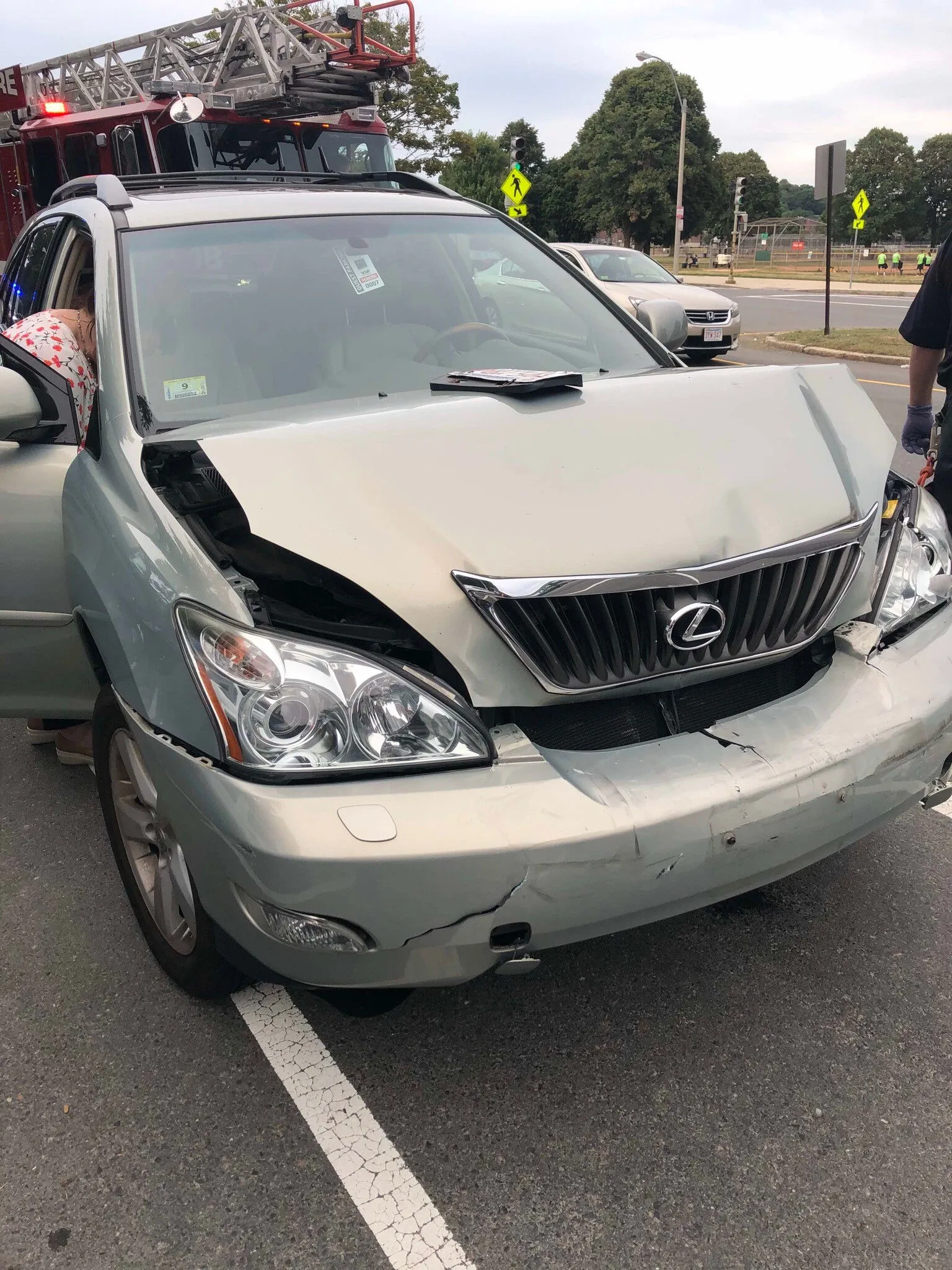
One of the most common arguments raised by insurance companies in low-speed collision cases is deceptively simple:
“There wasn’t enough vehicle damage to cause an injury.”
Many attorneys have heard it. Many jurors have believed it. Yet the scientific evidence tells a much different story. Having taken care of these car crash victims for 36 years in my Boston Chiropractic office, I know this to be a fact.
A landmark review titled “Deceleration During ‘Real Life’ Motor Vehicle Collisions” examined whether the change in vehicle velocity (commonly called Delta-V or ΔV) can accurately predict cervical spine injury. The authors reached an important conclusion for litigators: Delta-V alone is not a reliable predictor of whether a person will sustain a neck injury.
For personal injury attorneys, this finding has significant implications for proving causation and rebutting low-impact defense arguments.
The Myth of the “Magic Number”
Insurance defense experts often attempt to reduce injury analysis to mathematics.
If the Delta-V falls below a certain threshold, they argue that injury is unlikely or impossible. The assumption is that vehicle acceleration directly predicts human injury.
The review found that real-world collisions are considerably more complex.
Human occupants are not crash-test dummies. Every collision involves a unique interaction between the vehicle, the occupant, and numerous biomechanical variables. Because of this complexity, the authors concluded that Delta-V should NOT be used as the sole determinant of injury potential.
In other words, identical vehicle damage can produce dramatically different clinical outcomes.
Why People in the Same Crash Can Have Different Injuries
One of the most valuable points raised in the review is that injury depends upon far more than vehicle speed.
Factors influencing injury include:
Occupant position at impact
Head restraint adjustment
Seat design
Seatback stiffness
Whether the occupant anticipated the collision
Head rotation before impact
Age
Degenerative spinal changes
Individual tissue tolerance
Sex and body habitus
Each variable changes how forces are transmitted through the cervical spine during a collision.
This explains why one occupant may walk away without symptoms while another develops chronic neck pain despite riding in the same vehicle.
The Human Body Is Not a Vehicle
Perhaps the biggest mistake made in many courtroom arguments is equating vehicle damage with occupant injury.
Vehicles are engineered to absorb energy.
Human spines are not.
Modern automobiles contain bumpers, crumple zones, reinforced frames, and energy-management systems designed to protect the vehicle and its occupants. Consequently, relatively little visible damage may occur while substantial forces are still transmitted to the people inside.
For attorneys, this distinction is critical.
A photograph showing minimal bumper damage says very little about the loading experienced by the cervical facet joints, ligaments, muscles, or discs.
Why Normal Imaging Doesn’t End the Case
The review also reinforces another important point familiar to experienced injury litigators.
Many painful cervical injuries involve soft tissues that are difficult—or impossible—to visualize on routine X-rays or MRI examinations. Facet joint capsules, ligaments, muscles, and microscopic connective tissues may become injured without producing dramatic radiographic findings. Ligament testing is a vital component of a proper car crash examination.
Consequently, a normal MRI should never be interpreted as proof that no injury occurred. MRI’s will not pick up ligamentous injury in most cases.
Instead, diagnosis often depends upon careful clinical examination, patient history, functional testing, and, when appropriate, specialized diagnostic procedures.
Practical Lessons for Plaintiff Attorneys
When evaluating a motor vehicle case, attorneys should avoid relying exclusively on vehicle photographs or repair estimates.
Instead, consider asking:
What was the client’s head position at impact?
Was the collision anticipated?
What type of seat and head restraint was involved?
Did symptoms begin immediately or within hours?
Are there objective examination findings consistent with cervical injury?
Has the patient undergone evaluation by clinicians experienced in documenting soft-tissue and ligamentous injuries?
These questions often provide far more useful information than the repair bill.
The Bottom Line
The science has moved beyond the simplistic notion that vehicle damage determines injury severity.
The review of real-world motor vehicle collisions demonstrates that Delta-V is only one piece of a much larger biomechanical puzzle. Individual anatomy, occupant position, restraint systems, seat characteristics, and cervical biomechanics all contribute to injury risk.
For personal injury attorneys, this research provides an important evidentiary tool. It supports the position that low property damage should not be confused with low injury potential and that causation must be evaluated using the totality of the biomechanical and clinical evidence—not a single engineering measurement. Call me at 617-720-1992 to discuss your crash cases. Click here to view his credentials.
Literature Citation
Elbel M, Kramer M, Huber P, et al. Deceleration During “Real Life” Motor Vehicle Collisions.International Journal of Legal Medicine. 2009. Available through PubMed Central: https://pmc.ncbi.nlm.nih.gov/articles/PMC2657117/
“I was majoring in chemistry at Villanova University when my path turned to chiropractic. I was going on interviews to be a pharmaceutical sales representative, and they always asked me what I wanted to be doing in five years. My answer was always the same: “I want to be helping people, enjoying my work, while making a difference.”
“The MRI is normal, so there can’t be a serious injury.” Fortunately, modern science tells a different story. A landmark review by Les Barnsley, Susan Lord, and Nikolai Bogduk, published in Pain, fundamentally changed how physicians understand whiplash-associated disorders. The paper reviewed decades of biomechanical and clinical evidence and concluded that whiplash is a legitimate injury with identifiable anatomical pain generators—even when conventional imaging appears normal.
For decades, few injuries have generated as much controversy in personal injury litigation as whiplash. Defense experts have questioned its legitimacy, insurers have challenged its severity, and juries have often struggled with claims involving persistent symptoms despite normal imaging studies. Yet modern research increasingly supports the conclusion that whiplash-associated disorders (WAD) are legitimate injuries with identifiable biomechanical and neurophysiological mechanisms.
Researchers Woodward, Cook, Gargan, and Bannister evaluated patients suffering from chronic symptoms following whiplash injuries. Their findings deserve attention from attorneys handling car crash cases in Massachusetts. Gargan and Bannister are two of the most published researchers on whiplash injuries. In this group of 28 patients with chronic whiplash symptoms, 26 improved following chiropractic treatment.