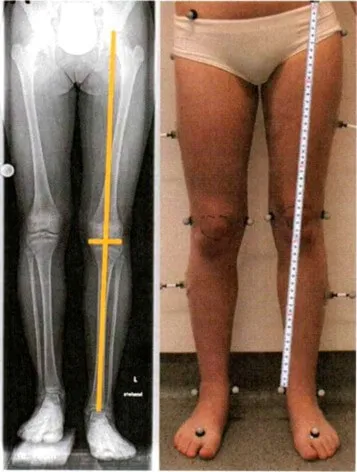
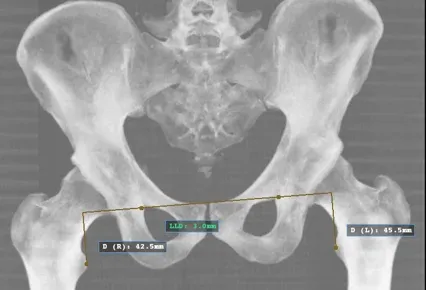
Leg length differences (LLD) are surprisingly common in children — and even small discrepancies can subtly change the way young bodies move. A recent study published in Gait & Posture investigated how mild leg length discrepancy influences pelvic alignment and gait compensation in children and adolescents, offering new insights into early adaptations that could impact long-term musculoskeletal health.
Unfortunately, the public and most health professionals are not aware of the dangers of leg length differences and we have seen many people in our Boston chiropractic office who have had this problem for many years, and it has caused major damage to their spine, discs, hips and legs.
What Is Leg Length Discrepancy?
According to the literature, 50% of the population has a leg length differential of 5 mm or more. Leg length discrepancy refers to a condition in which one leg is longer than the other. In children, this difference can come from congenital factors (present at birth), growth variations, or even injury. Unlike dramatic discrepancies that are easily noticeable, mild LLD (typically up to a few centimeters) is harder to detect with the naked eye, yet it may still influence how a child stands and walks.
While children rarely report low back pain, prolonged leg length deficiency can induce lasting changes in lumbar spinal biomechanics, potentially resulting in future back issues including low back pain and degenerative scoliosis. For runners, a leg length deficiency greater than 3 mm can lead to excessive joint loading, potentially causing muscle and joint overuse. The increased stress on the long limb side increases the stress on the cartilage and underlying bone, contributing to hip osteoarthritis.
Pelvic alignment and gait — the pattern of walking — are particularly sensitive to even slight differences in leg length. Pelvic tilt or rotation can occur as the body tries to adapt, which over time may lead to strain on muscles and joints if left unaddressed. The new research aimed to clarify these subtle effects.
The Study: Who Participated and What Was Tested
Researchers enrolled 51 children and adolescents with a range of mild LLD, measuring from 0.0 to 3.0 centimeters. Participants underwent clinical examination to rule out neurological issues, significant joint problems, or other conditions that could independently affect gait.
The study focused on quantifying pelvic motion and gait adaptations, using motion analysis to capture how the body adjusts when one leg is shorter than the other. The core questions were:
Does mild LLD significantly alter pelvic alignment?
What compensatory strategies do children naturally use during walking?
Key Findings: Pelvis and Joint Adaptations
The researchers found a clear link between leg length discrepancy and pelvic tilt — even when the discrepancy was small. Specifically:
Pelvic lateral tilt (where the pelvis drops toward the shorter leg) increased with higher degrees of LLD.
Children adapted their walking patterns in consistent ways to functionally “shorten” or “lengthen” the legs during movement.
One of the most notable compensations was increased ankle dorsiflexion on the longer leg. In other words, children flexed the longer ankle more during walking to effectively reduce its functional length, helping balance the gait. Other joint changes included greater knee flexion and reduced hip extension on the long leg side, patterns that help bring the foot closer to the ground and ease movement symmetry.
Why These Findings Matter
Although mild LLD is often considered clinically insignificant, this study suggests that even small differences can trigger noticeable changes in pelvic alignment and gait mechanics. These adaptations aren’t just academic — they may have real consequences:
Muscle strain and fatigue: Persistent asymmetrical walking can stress muscles and joints over time, potentially increasing the likelihood of pain or overuse injuries.
Growth-related impact: In growing children, persistent compensations could influence how muscles and bones develop, although more research is needed to confirm long-term effects.
Early detection opportunities: Understanding these subtle gait changes may help clinicians identify and treat LLD earlier, possibly improving outcomes with simple interventions such as orthotics or targeted physical therapy.
What Parents and Clinicians Can Take Away
If a child shows signs of uneven gait, complaints of fatigue after walking or running, or has unexplained lower-back or hip discomfort, it might be worth a professional gait evaluation — even if leg lengths appear similar at first glance. Simple screening tests and motion analysis can reveal compensatory patterns the naked eye might miss.
Most health providers often focus on more extreme discrepancies, but this research highlights the importance of mild LLD as well. Interventions like shoe lifts, balance exercises, or strengthening programs might help reduce compensatory strain and improve functional movement.
How We Approach the Care of People with Leg Length Differentials.
At Charles Steet Family Chiropractic, we work with the concept that small differences matter — particularly when it comes to lumbar spine and hip damage. The most important factor is to measure it properly. The research is adamant that the proper X-ray is vital to accurate measurement. We take the images required to get an accurate measurement then use our chiropractic adjustments to correct the biomechanics and use shoe lifts and heel pads to balance the differentials. We have had miraculous results using our protocols. Call us today at 617-720-1992 to see if we can help.
Harald Boehm, Chakravarthy Dussa, Impact of mild leg length discrepancy on pelvic alignment and gait compensation in children, Gait & Posture, Volume 121, Supplement, 2025, Page 36,
“I was majoring in chemistry at Villanova University when my path turned to chiropractic. I was going on interviews to be a pharmaceutical sales representative, and they always asked me what I wanted to be doing in five years. My answer was always the same: “I want to be helping people, enjoying my work, while making a difference.”
Key Finding: Long-Term Health Complaints Are More Common The study found that individuals involved in rear-end collisions were more likely to report future health complaints, including: Chronic neck pain Persistent headaches Musculoskeletal discomfort General health issues Importantly, these were not always immediate. Many individuals developed or continued to experience symptoms well after the initial event. For attorneys handling cases in Boston and throughout the Greater Boston Area, this finding necessitates that you account for this fact in your settlement discussions. Your clients are getting a settlement to compensate for a lifetime of potential health problems.
A 2019 study published in Traffic Injury Prevention examined how injury patterns have changed in today’s safer automobiles. The researchers analyzed nearly two decades of crash data involving belted occupants in frontal collisions and discovered something every personal injury attorney should understand. Modern vehicles have become remarkably good at preventing death. They have not eliminated injury.