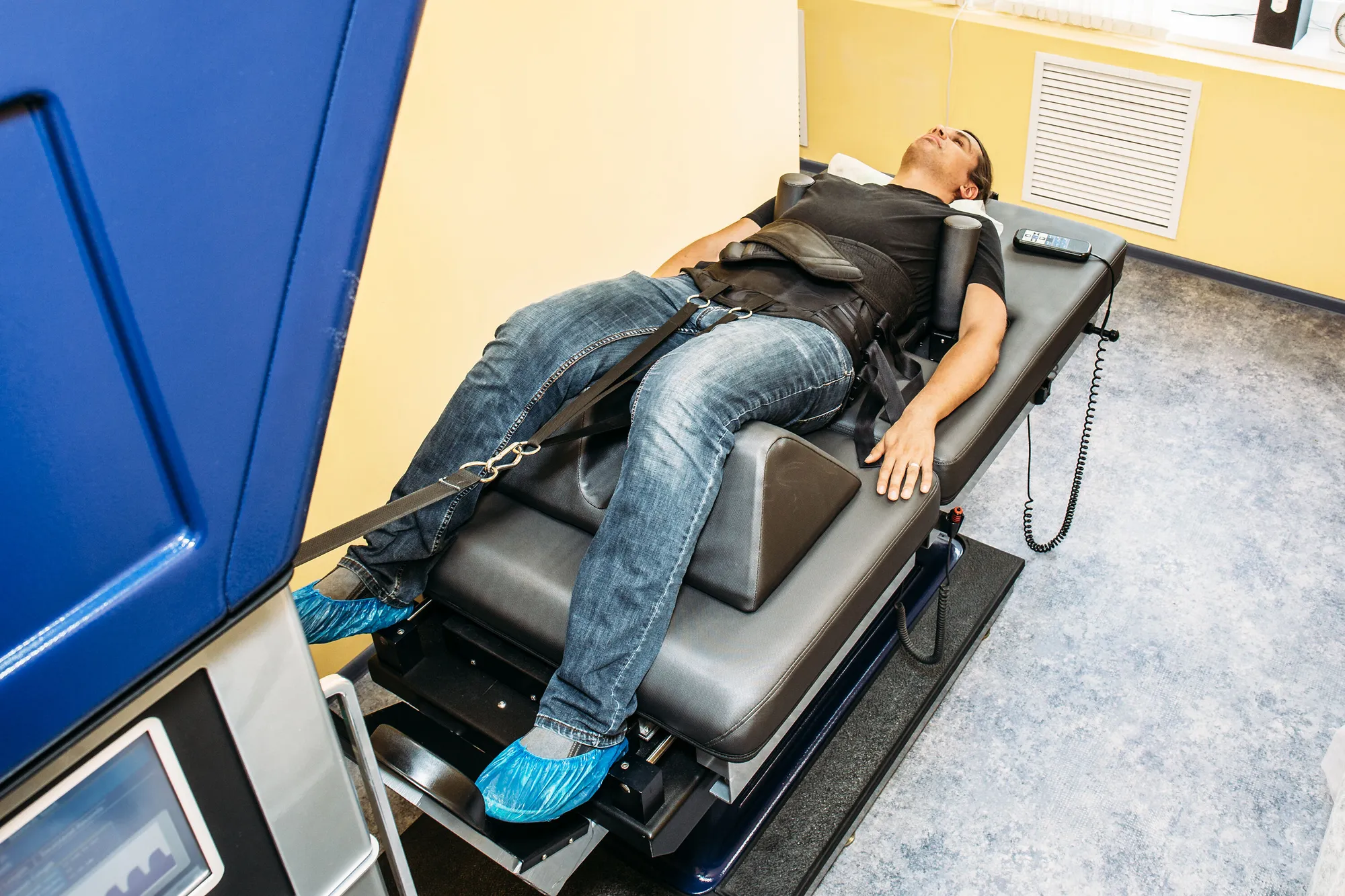
If you’ve been told you have a disc extrusion, chances are the next sentence sounded something like this:
“Yeah… you’re probably going to need surgery.”
Cue dramatic music. Maybe a slow zoom. Possibly a tear.
But here’s the reality: a lot of patients start planning surgery… when in many cases, they don’t actually need it.
Let’s break this down—without the doom-and-gloom.
What Is a Disc Extrusion? (And Why It Hurts So Much)
Your spinal discs act like shock absorbers between your vertebrae—think jelly donut, but slightly less delicious.
Each disc has:
A tough outer ring (annulus fibrosus)
A soft gel center (nucleus pulposus)
Disc problems exist on a spectrum:
Bulge: Disc pushes outward, still intact
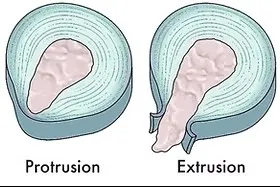
Protrusion: Inner material pushes into a weak spot
Extrusion: Inner material breaks through the outer wall
Sequestration: A fragment breaks off completely
A disc extrusion is the serious one—because that escaped material can press directly on a nerve.
And when that happens:
🔥 Shooting leg pain (sciatica) ⚡ Numbness or tingling 💪 Weakness 😩 “Nothing is working” frustration
Why Surgery Is Often Recommended First
The thinking goes like this:
“If the disc material is out… we should remove it.”
Logical—but incomplete.
Here’s what often gets missed:
👉 Your body can reabsorb disc material naturally 👉 Pain is caused by nerve pressure, not just the presence of the disc
So if you reduce the pressure…
You can reduce the symptoms—without cutting.
Non-Surgical Spinal Decompression: What It Actually Does
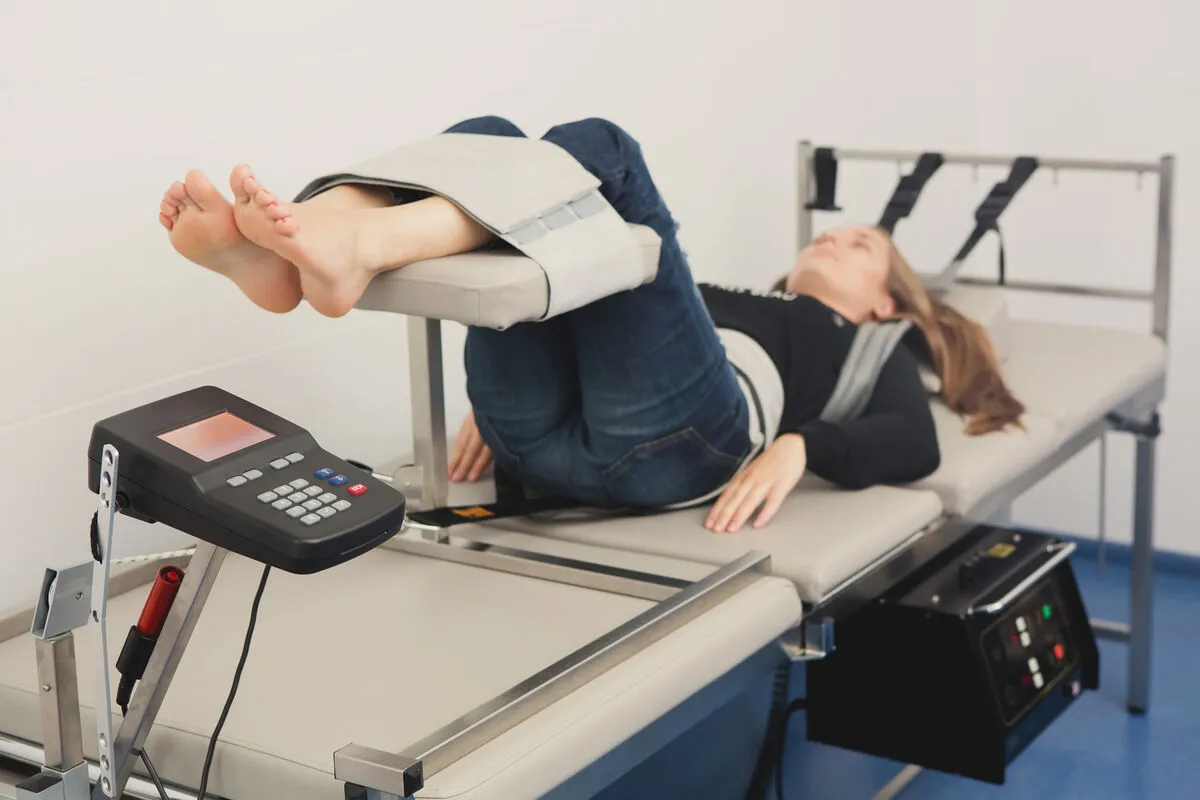
Non-surgical spinal decompression therapy uses a computer-controlled table to apply precise, rhythmic traction to the spine.
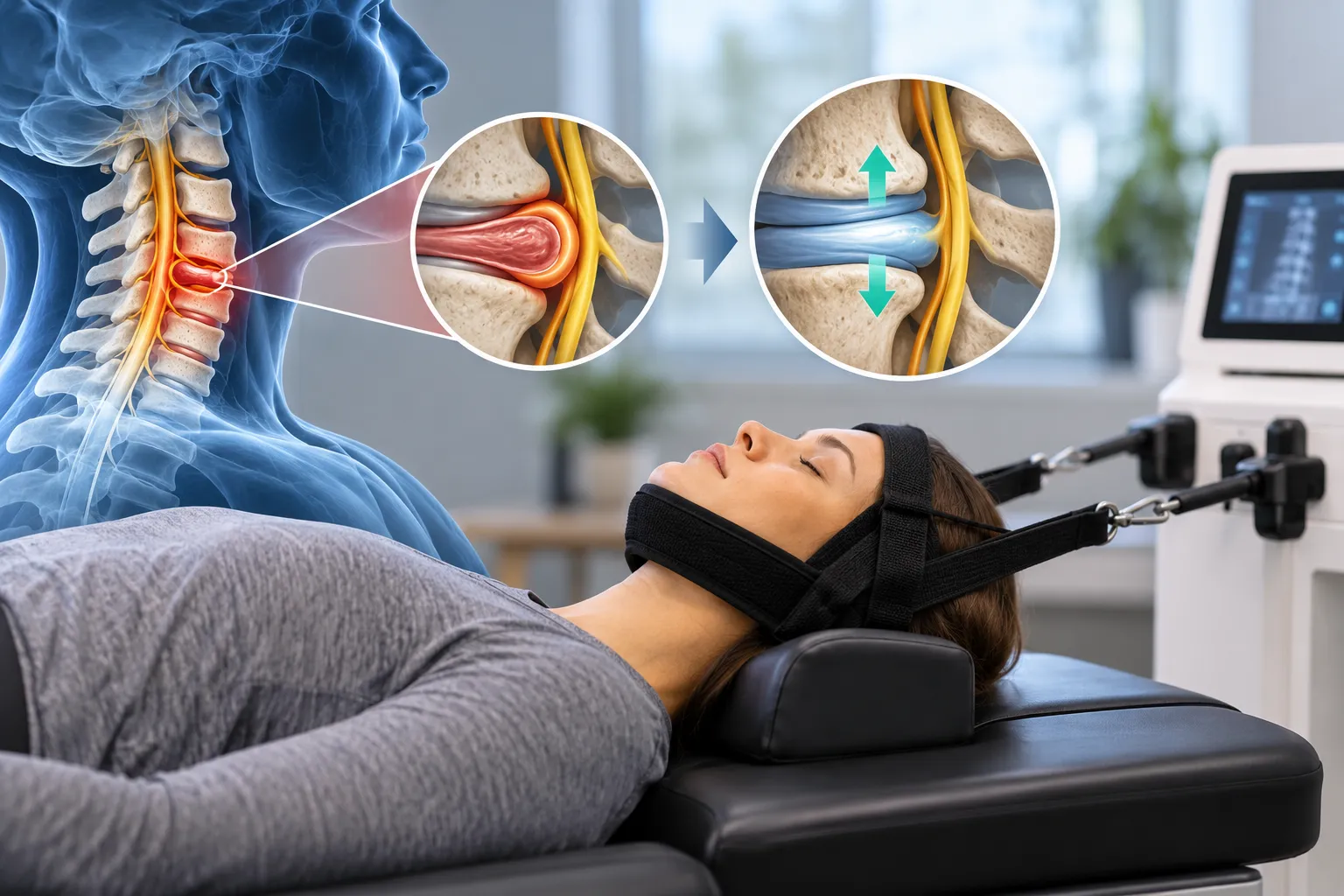
When done correctly, it creates negative pressure inside the disc—a vacuum effect.
That vacuum does two key things:
1. Pulls disc material away from the nerve
Reducing compression = reducing pain.
2. Rehydrates the disc
Discs don’t have a great blood supply. Decompression helps pull in fluid and nutrients so healing can begin.
Why Most Decompression Treatments Fail
Let’s be honest—many clinics say they offer decompression.
But there’s a big difference between: 👉 Targeted decompression 👉 And generic stretching
If the treatment doesn’t:
Target the exact disc level
Account for the direction of herniation
Use the correct angle of pull
Then it’s not treating the problem.
It’s just stretching your spine and hoping something good happens.
What the Research Shows About Disc Extrusions
Here’s where things get interesting.
Research—including studies published in The Journal of Contemporary Chiropractic—has shown that:
👉 Disc herniations and extrusions can physically shrink with non-surgical spinal decompression
Not just symptom relief.
Actual structural change.
We’re talking:
Measurable reductions on MRI
Significant decreases in nerve compression
Patients avoiding scheduled surgeries
In real-world cases, even large extrusions have been shown to reduce dramatically with properly applied care.
Can You Treat a Disc Extrusion Without Surgery?
The honest answer: Sometimes yes, sometimes no.
Surgery IS necessary when:
There is progressive neurological loss
Loss of bowel or bladder control
Severe instability or emergency conditions
But for many patients?
👉 Non-surgical spinal decompression is a legitimate, evidence-based option
And one that should be explored before committing to surgery.
How to Know If You’re a Candidate
Before choosing a treatment plan, ask:
Has my MRI been reviewed in detail?
Do we know the exact disc level and migration pattern?
Is the treatment customized to my condition?
Because successful decompression isn’t generic—it’s precise.
Final Thought: Don’t Rush Into Surgery
A diagnosis of disc extrusion can feel like a fast track to the operating room.
But here’s the truth:
👉 Your body may be able to heal 👉 Pressure can often be reduced without surgery 👉 The right treatment can change the outcome dramatically
So before you schedule surgery, ask:
“Is there a non-surgical way to reduce the pressure on this nerve?”
Because sometimes…
The best surgery is the one you never needed.
Call to Action
If you’ve been diagnosed with a disc extrusion and want to explore non-surgical options, schedule a consultation to review your MRI and determine if targeted spinal decompression is right for you. Call us today at 617-720-1992.
“I was majoring in chemistry at Villanova University when my path turned to chiropractic. I was going on interviews to be a pharmaceutical sales representative, and they always asked me what I wanted to be doing in five years. My answer was always the same: “I want to be helping people, enjoying my work, while making a difference.”
A March 2025 study in the Journal of Contemporary Chiropractic examined another conservative option—non-surgical spinal decompression—and the results are encouraging for patients looking to avoid surgery. What Is Non-Surgical Spinal Decompression? Non-surgical spinal decompression is a targeted, computerized treatment that gently stretches the spine using precise, controlled forces. Unlike traditional traction, advanced decompression systems are designed to reduce pressure within damaged spinal discs while minimizing muscle guarding. The goal is to: Reduce pressure on irritated spinal nerves Improve the flow of nutrients and oxygen into damaged discs Encourage the body’s natural healing processes Reduce pain and inflammation Improve spinal mobility and function For many patients suffering from lumbar disc injuries, this treatment offers a conservative alternative before considering injections or surgery.
By Treatment #5, Her Radicular Symptoms Were Gone A recently published 2026 case study provides an exciting look at what happened when researchers used cervical non-surgical spinal decompression in a patient with a significant cervical disc herniation. The results included improvements not only in symptoms, but also in neurological examination findings and MRI measurements. After approximately 2½ weeks and only five treatments, the patient reported that her radicular symptoms had disappeared and she had returned to normal activities of daily living. She could once again carry grocery bags with both arms without pain.
A September 2025 study published in Military Medicine examined the effectiveness of non-surgical spinal decompression for patients suffering from chronic low back pain. The findings suggest that this conservative treatment may significantly reduce pain and improve function for many patients, offering hope before considering more invasive procedures.