
102 Charles St

Boston, MA 02114

Phone Number

(617) 720-1992

Follow Us:

Dr. Chris Quigley Takes the Stage at the WHDH Health and Fitness Expo this Saturday, June 14th at 12 noon presenting “Posture: The Window to Great Health”  Hynes Convention Center, Boston.

Dr. Chris Quigley is presenting “Posture: The Window to Great Health” at the WHDH Health and Fitness Expo this Saturday, June 14th at 12 noon at the Hynes Convention Center demonstration stage.   His presentation will review the research that links good posture and longevity.   He will be sharing the stage with New England Patriot All Pro Vince Wilfork, notable talk show host Jerry Springer, US Olympic Athletes and the WHDH news team.

Stage Schedule

Dr. Chris is a board certified chiropractor with advanced training in helping people with spinal trauma, MRI, Medical Legal Documentation and taking care of children.  Starting this August, he will be entering his 25th year of practice on Beacon Hill.

Dr. Quigley is the Director of Charles Street Family Chiropractic and Physical Therapy located at 102 Charles Street, Boston.  The office is a leading chiropractic office and also provides the Ideal Protein Weight Loss Program, Physical Therapy, Rehabilitation, and Massage.  The office also serves as the Boston location for Shoulder Centers of New England, run by Dr. Robert McLaughlin, M.D.   Starting in July 2014, we will also be offering acupuncture.
Picture of Dr. Christopher Quigley

Dr. Christopher Quigley

“I was majoring in chemistry at Villanova University when my path turned to chiropractic. I was going on interviews to be a pharmaceutical sales representative, and they always asked me what I wanted to be doing in five years. My answer was always the same: “I want to be helping people, enjoying my work, while making a difference.”

Book Your Appointment

Get started on your path to optimal health today!

More Valuable Reading

Before Back Surgery: What Three Important Studies Say About Nonsurgical Spinal Decompression

The number that should stop every elective-surgery patient in their tracks is 94%.

In a large 2017 Journal of Pain Research study of 1,842 people who had undergone lumbar spine surgery, 94% reported some degree of residual low-back pain. That does not mean 94% had severe pain, nor does it mean 94% of the operations were surgical failures. But for an invasive procedure that many patients understandably hope will eliminate their back pain, the persistence of any low-back pain in such a large proportion of respondents is difficult to dismiss.

The same study found that 20.6% met the researchers’ criteria for failed back surgery syndrome —roughly one out of every five patients. Residual numbness was reported by 69.8%, cold sensations by 43.3%, and paresthesia such as tingling or abnormal sensations by 35.3%.

Read More »

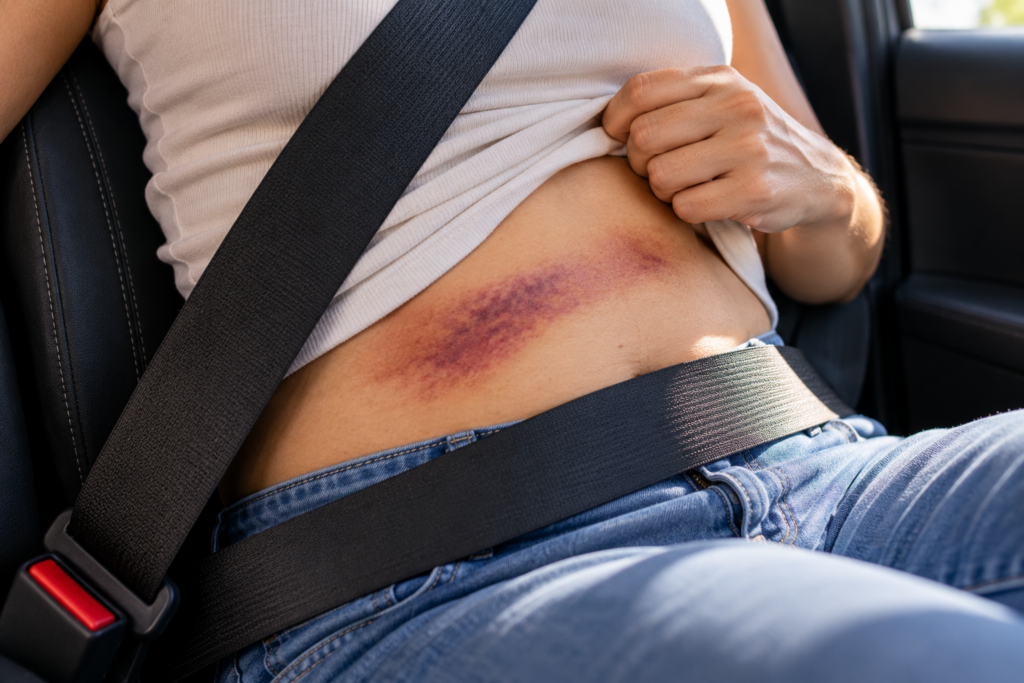
The Seat Belt Sign: What a Bruise Can Reveal About Abdominal Injury After a Boston Car Accident

The medical literature recognizes restraint-related injuries to the spine and abdominal structures. Rutherford documented the increase in neck sprains and sternum fractures following compulsory seat-belt use and separately identified an apparent, unexpected increase in abdominal-organ injuries. Later medical literature continued to emphasize the significance of the seat-belt sign and its association with internal injury.

Read More »