102 Charles St

Boston, MA 02114

Phone Number

(617) 720-1992

Follow Us:

Dr. Chris Quigley gets certificate in Collision Reconstruction and Biomechanical Engineering

April 17, 2018, Boston

Boston Chiropractor, Dr. Chris Quigley has completed his post graduate certification in Collision Reconstruction and Biomechanical Engineering. This comprehensive program details the ways that math is used to determine how a crash occurred and the forces that were experienced by the occupants of the cars and the vehicles involved. This course had a special section on low speed impacts. Low speed impacts have been shown to cause numerous injuries due to how quick that an accident occurs, magnifying the forces experienced by the car occupants.

This course enables Dr. Quigley to give his opinion on the forces that cause injury and the injuries sustained. In contrast, auto reconstruction specialists can only give analysis of the forces involved in the accident and the typical physician can only give analysis of the injuries. The unique ability to combine specialties makes Dr. Quigley’s skills very important in the auto injury case.

The injuries sustained in car crashes can be debilitating. The danger with car accidents is that 20% of victims do not suffer immediate pain. The pain from whiplash can show up days, months or years later. Dr. Quigley said “This certification allows me to help those in Boston who have suffered whiplash injuries in a more comprensive fashion. Adding to my expert status in the whiplash area helps my patients in understanding their injuries and creating recovery plans that are highly effective.

Dr. Quigley is the author of the Amazon best seller “After the Car Crash” and is in his 29th year of practice helping to create miracles for thousands of patients.
 

Picture of Dr. Christopher Quigley

Dr. Christopher Quigley

“I was majoring in chemistry at Villanova University when my path turned to chiropractic. I was going on interviews to be a pharmaceutical sales representative, and they always asked me what I wanted to be doing in five years. My answer was always the same: “I want to be helping people, enjoying my work, while making a difference.”

Book Your Appointment

Get started on your path to optimal health today!

More Valuable Reading

Before Back Surgery: What Three Important Studies Say About Nonsurgical Spinal Decompression

The number that should stop every elective-surgery patient in their tracks is 94%.

In a large 2017 Journal of Pain Research study of 1,842 people who had undergone lumbar spine surgery, 94% reported some degree of residual low-back pain. That does not mean 94% had severe pain, nor does it mean 94% of the operations were surgical failures. But for an invasive procedure that many patients understandably hope will eliminate their back pain, the persistence of any low-back pain in such a large proportion of respondents is difficult to dismiss.

The same study found that 20.6% met the researchers’ criteria for failed back surgery syndrome —roughly one out of every five patients. Residual numbness was reported by 69.8%, cold sensations by 43.3%, and paresthesia such as tingling or abnormal sensations by 35.3%.

Read More »

The Seat Belt Sign: What a Bruise Can Reveal About Abdominal Injury After a Boston Car Accident

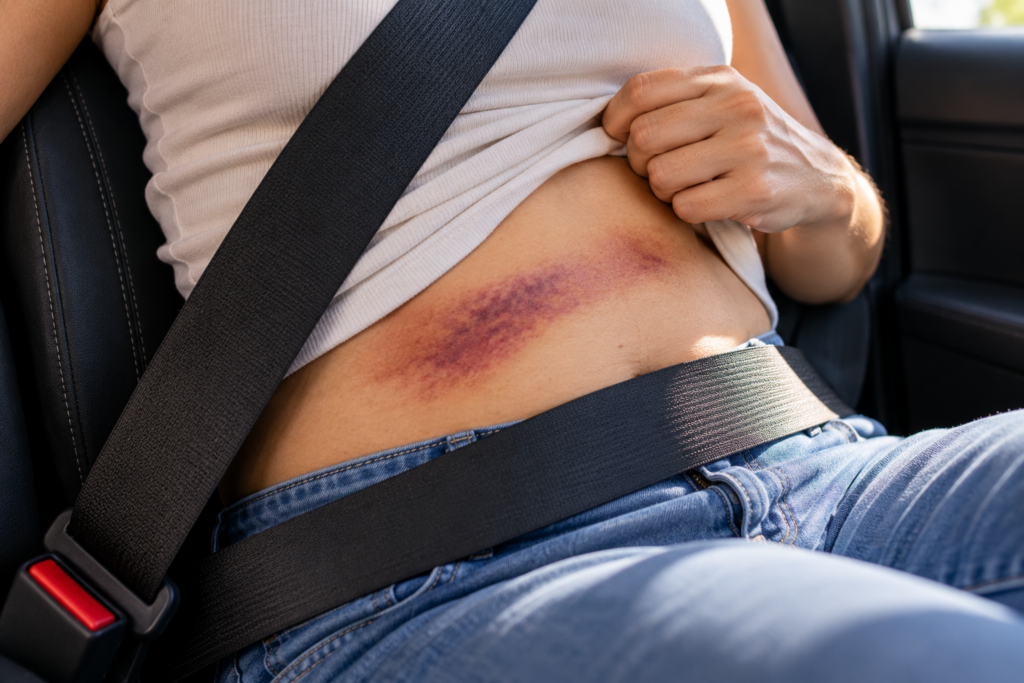
The medical literature recognizes restraint-related injuries to the spine and abdominal structures. Rutherford documented the increase in neck sprains and sternum fractures following compulsory seat-belt use and separately identified an apparent, unexpected increase in abdominal-organ injuries. Later medical literature continued to emphasize the significance of the seat-belt sign and its association with internal injury.

Read More »